
In the volatile waters where the Persian Gulf meets the Arabian Sea, Iran has firmly established the upper hand in the Strait of Hormuz, turning a narrow shipping lane into a strategic choke point that defies the conventional military superiority of its adversaries. Through a combination of geography, low-cost asymmetric tactics, and relentless determination, Tehran has disrupted one of the world’s most vital energy arteries, forcing global powers to reckon with the high costs of confrontation even as U.S. and Israeli strikes continue.
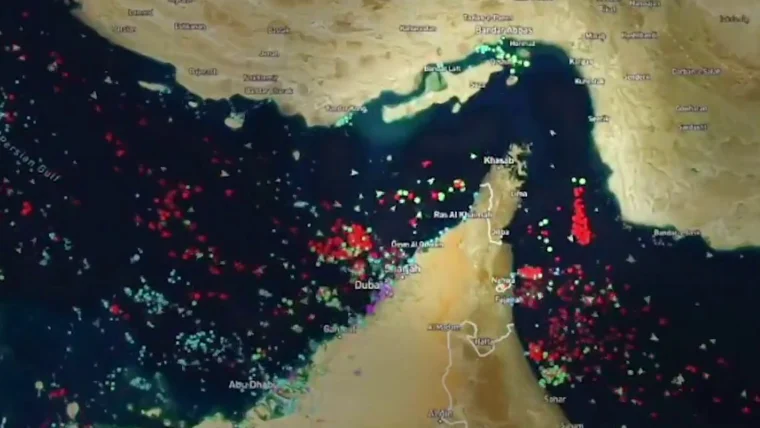
On March 27, 2026, with shipping traffic through the strait reduced to a trickle and oil prices spiking in response to Iranian threats, analysts from multiple outlets note that the Islamic Revolutionary Guard Corps Navy (IRGCN) has effectively weaponized the waterway. What was once a routine transit route for roughly 20 percent of global oil supplies now stands as a symbol of Iran’s resilience, where speedboats, drones, and mines create hazards that no amount of advanced warships can fully neutralize overnight.
The Geography Iran Turned Into a Fortress
The Strait of Hormuz is no ordinary passage. At its narrowest, just 21 miles wide, with shipping lanes hugging Iran’s southern coastline, it offers Tehran a natural defensive advantage that military planners have exploited for decades. Mountain ridges along the shore serve as protected launch pads for anti-ship missiles, while hidden tunnel networks shelter swarms of fast attack boats—often called the “mosquito fleet”—that can dart out, strike, and vanish before larger vessels respond. This setup, honed during the Iran-Iraq War in the 1980s and refined through years of drills, makes the strait a nightmare for any force attempting to secure it by brute strength alone.
Western officials, speaking on condition of anonymity to outlets like CNN and The New York Times, acknowledge that even with superior airpower and carrier strike groups in the region, reopening the strait requires sustained, resource-intensive operations. Small, agile Iranian craft equipped with rocket launchers and unmanned surface vessels exploit the confined waters, where traditional naval tactics lose their edge. As one defense analyst familiar with Pentagon assessments put it, “Iran doesn’t need to sink every tanker; it just needs to make insurers and shippers think twice.”
Iran’s Arsenal: Cheap Tools, outsized Impact
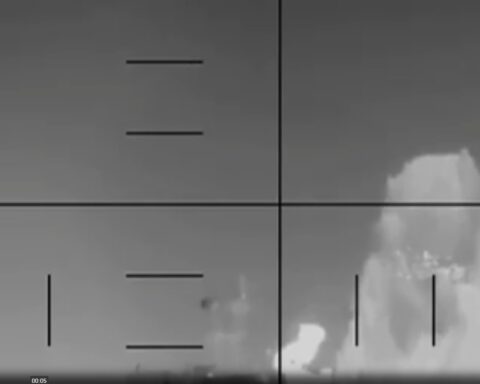
At the heart of Iran’s upper hand lies its mastery of asymmetric warfare. The IRGCN deploys thousands of naval mines—some laid by rocket from shore, others from disguised civilian vessels—creating invisible threats that demand painstaking clearance operations. Anti-ship cruise missiles, positioned in hardened coastal sites, can reach across the strait in minutes. Add to that fleets of low-cost drones and speedboats, many powered by commercial engines yet capable of overwhelming defenses through sheer numbers, and the result is a deterrent that punches far above Iran’s conventional weight.
Reports from Fox News and NBC highlight how these tools have kept global shipping on edge despite U.S.-Israeli efforts to degrade Iranian capabilities. In recent weeks, Iranian forces have targeted vessels with projectiles, forcing reroutes or halts that echo the 2019 tanker attacks but on a broader scale. Military experts point out that a single Shahed-style drone, costing a fraction of a precision-guided missile, can ignite a supertanker and send insurance premiums skyrocketing. This cost asymmetry—Tehran’s cheap hardware versus the expensive countermeasures required—gives Iran staying power in a prolonged standoff.
Why Iran Holds the Upper Hand in the Strait of Hormuz
Despite significant losses from airstrikes on its missile production and naval infrastructure, Iran maintains operational flexibility in the strait that its opponents struggle to match. The IRGCN operates independently of the regular navy, reporting directly to the supreme leader and focusing exclusively on Persian Gulf defense. This structure allows rapid, decentralized decision-making: commanders can launch hit-and-run raids without waiting for centralized approval.
Pentagon briefings relayed through CNN correspondents, including national security reporter Zachary Cohen, underscore the challenge. U.S. forces have struck mine-laying vessels and coastal launch sites, yet Iran retains enough dispersed assets to sustain disruptions. “Iran has gotten inside the OODA loop,” one strategist observed, referencing the military concept of outpacing an enemy’s observe-orient-decide-act cycle. By widening the conflict horizontally—targeting not just ships but linked energy infrastructure in Gulf states—Iran forces Washington to divide its attention and resources.
Historical precedent reinforces this edge. During the 1980s “Tanker War,” Iran used similar tactics to harass shipping, proving that even a weaker navy could impose economic pain. Today’s version is more sophisticated, incorporating GPS-guided unmanned vessels and lessons from Houthi operations in the Red Sea. Gulf Arab states, dependent on the strait for their own exports, find themselves caught in the crossfire, reluctant to escalate further lest their facilities become targets.
Economic Shockwaves and Global Ripples
The upper hand in Hormuz translates directly into economic leverage. With roughly 15 million barrels of crude and significant liquefied natural gas transiting daily in peacetime, even partial closures send tremors through markets. Asian buyers, particularly China and India, face supply crunches, while European energy prices climb amid diversions. Pipeline bypasses in Saudi Arabia and the UAE cover only a fraction of the volume, leaving LNG shipments especially vulnerable.
Bloomberg and BBC reporting detail how insurers have withdrawn war-risk coverage, stranding hundreds of tankers and inflating freight rates. Oil futures have surged, complicating inflation fights in consuming nations. For Iran, this isn’t mere retaliation—it’s survival strategy. By raising the global cost of the conflict, Tehran hopes to erode political will in Washington and Tel Aviv, buying time for its regime amid domestic pressures.
Critics in U.S. policy circles, quoted in The New York Times, warn that prolonged disruption could reshape energy geopolitics. Beijing, despite its ties to Tehran, has seen its tankers turned away, underscoring that no one receives special treatment when the strait becomes a battlefield. Yet Iran’s selective allowances for “friendly” shipping hint at future leverage in any negotiated settlement.
Diplomatic and Military Dilemmas for Washington
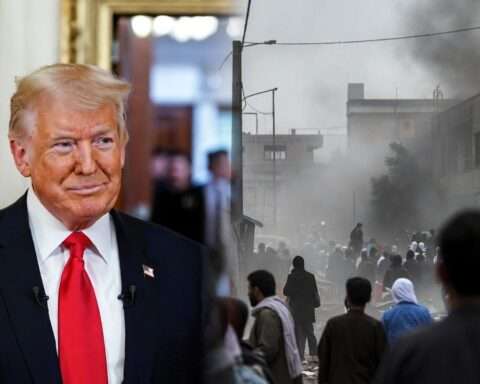
For the United States and its partners, reclaiming the strait presents no easy path. Options range from diplomatic ultimatums—such as President Trump’s recent 48-hour demand to reopen lanes—to kinetic operations involving minesweepers, escorts, and further airstrikes. Each carries risks: escalation could draw in more regional actors or strain U.S. readiness elsewhere. Littoral combat ships with mine-countermeasure packages have deployed, but experts caution that full clearance could take months, during which economic damage accumulates.
NBC and Reuters analyses note that Iran’s threats to strike power plants and desalination facilities in Gulf states add another layer. Any U.S. move to bomb Iranian energy sites risks reciprocal attacks that could cripple allied infrastructure. This mutual vulnerability explains why, even after degrading much of Iran’s ballistic missile force, the strait remains a red line Tehran defends fiercely.
Regional dynamics complicate matters further. Oman and the UAE, with coastlines bordering the strait, balance alliances with Washington against the need for stability. Their quiet diplomacy reflects the recognition that Iran’s geographic proximity grants it persistent influence, no matter the outcome of broader airstrikes.
Looking Ahead: A New Normal or Fleeting Advantage?
As the conflict enters its fourth week, the question lingers whether Iran’s upper hand is sustainable or a temporary high-water mark. Sustained U.S. pressure could eventually erode its capabilities, yet history suggests Tehran excels at adapting—replacing lost drones with commercial off-the-shelf parts and shifting tactics to evade detection. Analysts from think tanks cited across outlets predict that even a reopened strait might require ongoing multinational patrols, akin to policing the Suez or Panama canals, to prevent future closures.
For now, the balance tilts toward Iran in this critical theater. By refusing to yield control of Hormuz without concessions, Tehran has reminded the world that great-power projection has limits when confronted by determined, localized resistance. The coming days will test whether military might or economic reality ultimately prevails.
This article is based on reporting from BBC, CNN, NBC, Fox News, New York Times and other media outlets.
Focus keywords: Iran Strait of Hormuz upper hand, why Iran controls Strait of Hormuz, Iran asymmetric warfare Hormuz, Iran mines drones Strait Hormuz 2026, US Israel Iran conflict Hormuz disruption