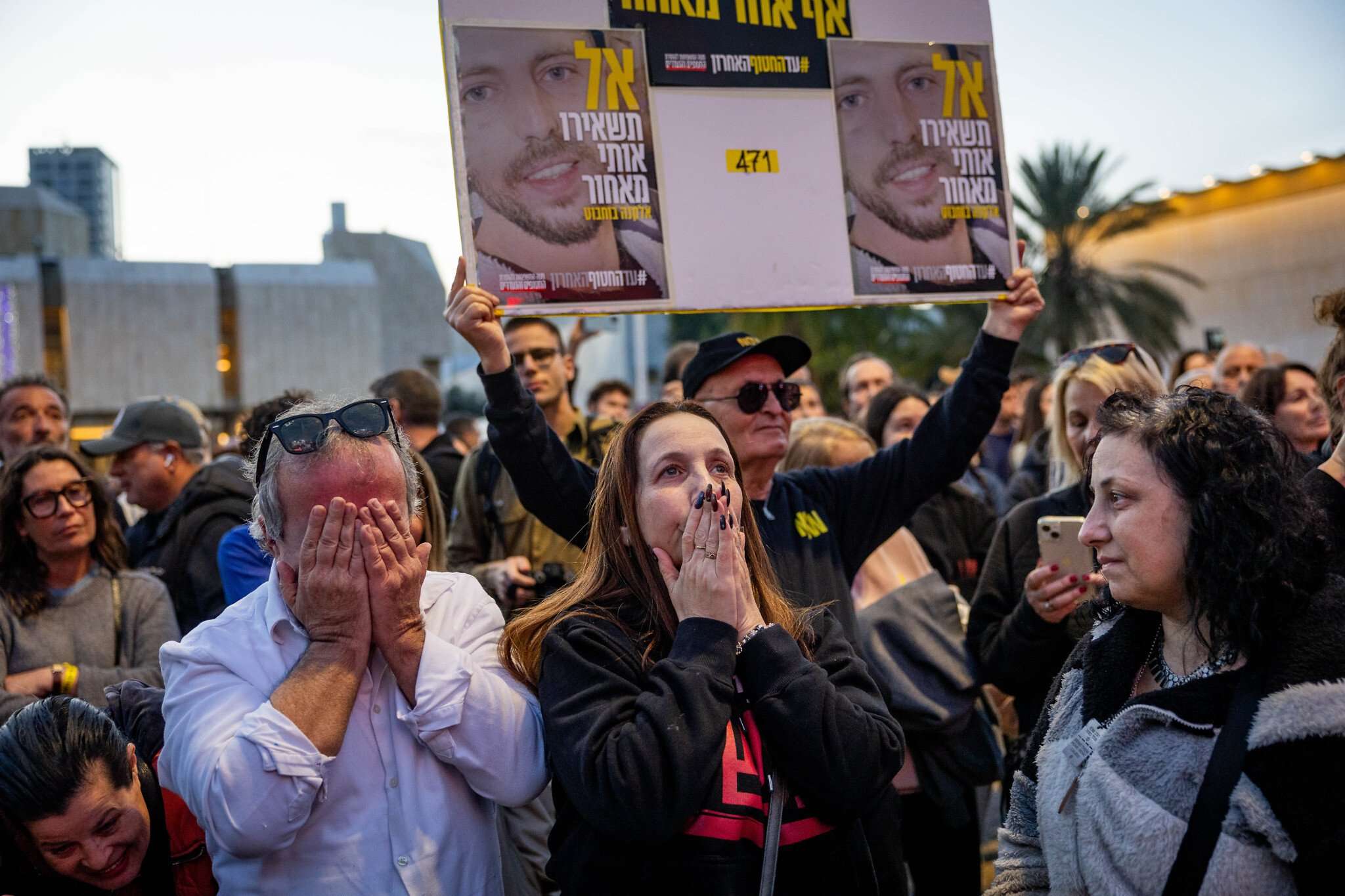

Thousands of Israelis converged on Tel Aviv’s Hostages Square on the eve of a historic hostage release, their faces illuminated by screens broadcasting live updates from Gaza, as the crowd swelled with a potent mix of anticipation, relief and lingering grief after two years of anguish over loved ones held by Hamas.
On October 12, 2025, as the first light of dawn crept over the Mediterranean, the plaza transformed into a sea of yellow ribbons and Israeli flags, symbols of solidarity that have defined this space since the October 7, 2023, attacks. What began as a modest vigil has evolved into Israel’s emotional epicenter, where families, activists and ordinary citizens have gathered weekly to demand the return of captives. With a U.S.-brokered ceasefire holding, the square buzzed with preparations for the expected release of the remaining 20 living hostages, part of a phased deal that includes prisoner swaps and troop withdrawals from Gaza.
The air was thick with Hebrew folk songs, echoing off the modern facades of surrounding buildings. Volunteers distributed water and snacks, while large screens flickered with images of the hostages—faded photos pinned to a massive installation of empty chairs arranged around a long table set for 234, a stark reminder of those abducted. “This could be the last night we stand here like this,” said Einav Zangauker, mother of hostage Matan Zangauker, her voice cracking over a makeshift microphone. “We’ve screamed, we’ve marched, we’ve begged. Now, finally, they’re coming home.”
A Square Forged in Fire: Two Years of Unyielding Vigil
Hostages Square, officially part of Habima Square near the iconic Tel Aviv Performing Arts Center, was rechristened in the war’s chaotic early days. On October 8, 2023, families of the missing began affixing photos to lampposts and walls, turning the bustling urban hub into a shrine of desperation. Over 700 Saturday nights followed, each marked by chants of “Now! Now!” and impassioned speeches from relatives, former captives and celebrities. The plaza became a microcosm of Israel’s fractured soul—grief-stricken kibbutzniks from the south mingling with urban professionals, all united in fury at Hamas and frustration with their government’s protracted response.
The site’s symbolism deepened with installations like the “Clock of Captivity,” a digital timer ticking away days since the abductions, now frozen in collective memory at 733. Artists contributed murals depicting the hostages’ faces amid blooming olive branches, while a “Wall of Hope” invited messages scrawled in multiple languages. “It started as a cry for help,” recalled Noa Argamani, a former hostage released in an earlier deal, speaking to reporters amid the throng. “Now it’s a testament to our resilience.” By midnight on October 12, police estimated 65,000 attendees, with numbers swelling as buses ferried supporters from Jerusalem, Haifa and the Negev.
Yet beneath the optimism lurked shadows. Protesters carried signs reading “No Victory Without Them,” a jab at Prime Minister Benjamin Netanyahu’s oft-repeated mantra. Boos rippled through the crowd when his name surfaced in speeches, a stark contrast to the thunderous applause for President Donald J. Trump, whose 20-point peace plan had jump-started the talks. “Trump gets it—strength with compassion,” said Yair Keshet, uncle of a released hostage, waving a “Nobel for Trump” banner. Critics, including some left-leaning attendees, worried the deal’s concessions—nearly 2,000 Palestinian prisoners for the 20 Israelis—might embolden militants, but the prevailing mood drowned out dissent.
Israelis Gather at Hostages Square Ahead of Hostages Release
As the clock struck 4 a.m. local time, the square erupted in cheers when U.S. Special Envoy Steve Witkoff took the stage, flanked by Jared Kushner and Ivanka Trump. “Your nightmare is over,” Witkoff declared, his voice booming over speakers. The crowd, many sleepless from an all-night “yellow vigil,” surged forward, American flags mingling with Israeli ones in a tapestry of transatlantic alliance. Kushner, drawing on his role in the Abraham Accords, spoke of “a new dawn for peace,” while Ivanka evoked her father’s unyielding support: “He promised to bring them home, and here we are.”
Families of the soon-to-be-freed dominated the program. Hagai Angrest, father of 20-year-old Matan Angrest, clutched a photo of his son, tears streaming as he addressed the masses. “We’ve waited 733 days. Tonight, we breathe.” Nearby, Dalia Cosnir-Horn, whose brother-in-law Eitan Horn remains among the captives, shared a more tempered hope: “Joy, yes—but terror too. What if it falls apart again?” Her words echoed the trauma of prior false starts, including a November 2023 pause that freed some but left dozens behind.
Performers lightened the tension: Jewish American rapper Kosha Dillz freestyled lyrics blending hip-hop beats with Hebrew prayers, drawing laughter and impromptu dances. Violinist Agam Berger, kidnapped from Kibbutz Nahal Oz and released in January, played a haunting rendition of “Hatikvah,” Israel’s anthem, her bow trembling on the strings. “Music kept me sane in the tunnels,” she later told the crowd. Children, some born during the war, waved glow sticks, their innocence a poignant counterpoint to the adults’ haunted eyes.
Security was omnipresent—barriers, snipers on rooftops, K-9 units patrolling perimeters—reflecting threats from Hezbollah and Iranian proxies. Yet the atmosphere felt sacred, almost festive, with food stalls offering falafel and sabich, and pop-up tents for weary vigil-keepers. “This square has been our church, our town hall, our battlefield,” said Anat, a Bo’u movement founder, surveying the scene. “Tonight, it becomes our victory lap.”
Echoes of October 7: Personal Torments in the Collective Heartbeat
The gatherings at Hostages Square have always been more than protests; they are repositories of raw testimony. On this eve, stories poured forth like confessions. Michel Illouz, father of hostage Ofir Illouz, recounted the Nova music festival abduction that claimed his son’s freedom: “He was dancing to life, and they dragged him to hell.” Illouz, who had boycotted earlier rallies in despair, returned invigorated. “Trump’s deal isn’t perfect, but it’s a lifeline.”
Tova Gohar, a volunteer since day one, described the square’s evolution: “We started with 50 people, whispering names. Now, we’re roaring them.” Her booth distributed yellow wristbands inscribed with hostage IDs, a ritual that binds strangers in shared sorrow. Doron Katz Asher, freed with her daughters in 2023, shared a stage moment with Ilan Dalal, father of Guy Gilboa-Dalal: “Hug them for me when they arrive,” she urged, their embrace drawing sobs from onlookers.
For some, the night stirred unresolved pain. Tal Shoham, released after 505 days, spoke of captivity’s scars: “The darkness lingers, but seeing this crowd? It heals.” His words resonated with Yaira Gutman, whose daughter Tamar perished at Nova. “We celebrate for the living, but my girl is gone,” she said, pinning a yellow ribbon to her shirt. The square, in its inclusivity, accommodated such duality—joyous chants interspersed with moments of silence for the 1,200 killed on October 7.
International solidarity amplified the vigil. Messages from global leaders projected on screens, including one from Canadian Prime Minister Mark Carney, en route to an Egypt summit. U.S. flags proliferated, a nod to Trump’s pivotal role, though some attendees tempered praise: “He’s done more than our PM, but peace demands all sides,” noted Nili Landsman, a longtime protester.
Trump’s Shadow and Netanyahu’s Eclipse: Politics in the Plaza
No figure loomed larger than Trump, whose envoy’s presence electrified the square. Banners proclaimed “Thank You, Trump!” in English and Hebrew, while a beachfront display nearby spelled his name in white stones visible from the air. As Air Force One’s flyover approached, the crowd hushed, then exploded in applause, chanting his name as the plane dipped low. “He sees us, he hears us,” exulted Daniel Lifshitz, uncle of a hostage.
Netanyahu, conversely, faced derision. His absence from the square—unlike Trump’s team—fueled accusations of detachment. “Bibi prolonged this for politics,” scoffed a demonstrator, echoing polls showing his approval at historic lows. The premier’s office countered that the deal honors Israel’s security, but boos drowned out defenses when his image flashed on screens. This partisan rift, unusual in national trauma, underscored the square’s role as a barometer of public fury.
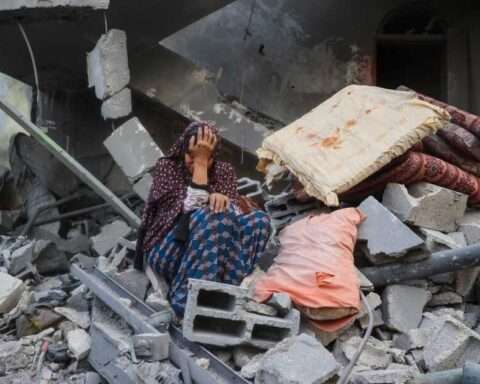
Broader geopolitical stakes hovered. The deal’s phase one—hostage release for prisoners and 47% Gaza withdrawal—sets the stage for Trump’s Sharm el-Sheikh summit with 20 nations. Aid convoys already rumbled into Gaza, U.N. officials reported, ferrying fuel and medicine to a strip reeling from devastation. Yet Hamas statements tempered optimism, vowing resistance unless demands met fully.
From Vigil to Victory: The Dawn That Followed
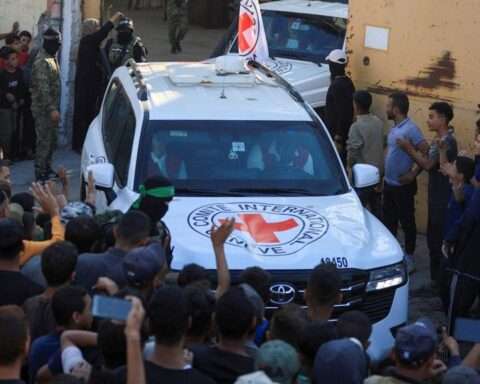
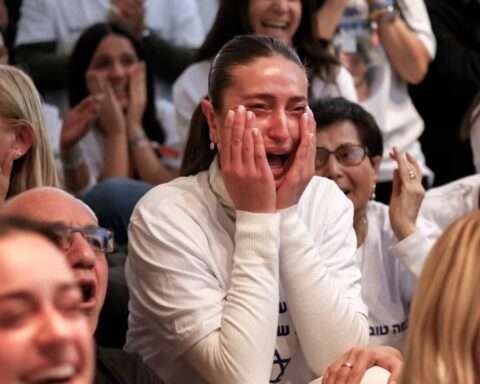
As October 13 dawned, the square’s energy crested with news of the first seven releases: brothers Gali and Ziv Berman, Alon Ohel, Eitan Mor, Guy Gilboa-Dalal, Omri Miran and Matan Angrest. Screens broadcast their handover to the Red Cross, eliciting roars that shook the plaza. “They’re free! They’re free!” echoed from thousands, hugs cascading like waves. Hoshana Rabba prayers, timed with the Jewish holiday, blended ancient supplications with modern triumph, shofars blaring amid tears.
Families raced to absorption centers near the Gaza border, but the square remained the communal hearth. “The fight isn’t over until all 48 are accounted for,” insisted the Hostages and Missing Families Forum, referencing remains of the deceased also due. Psychologists on-site warned of re-traumatization, urging support networks. Yet for now, euphoria reigned: children danced on shoulders, elders wept in embraces, a nation exhaled.
Trump’s arrival at Ben Gurion Airport synchronized with the convoy’s progress, his fist pump mirroring the crowd’s. En route to the Knesset, he would address a divided parliament, then jet to Egypt for the summit. In Hostages Square, as the sun rose, one banner captured the zeitgeist: “From Darkness to Light.” After 733 days, the plaza—born of horror—stood as witness to possibility, its empty chairs soon to fill.