
In an era of perpetual military engagements, from drone strikes in distant deserts to naval confrontations in contested seas, one glaring absence stands out: Congress hasn’t formally declared war since World War II, leaving presidents with expansive leeway to commit U.S. forces abroad without the legislative body’s explicit stamp of approval. This shift has transformed how America wages conflict, raising questions about accountability, constitutional intent, and the erosion of checks and balances in national security decisions.
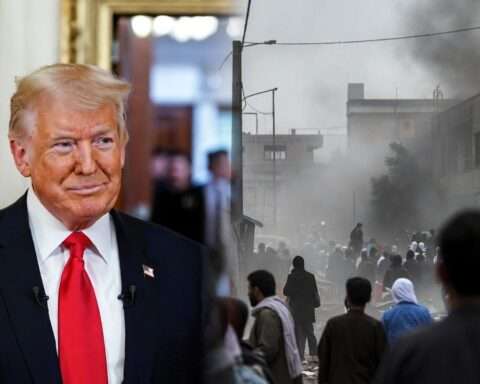
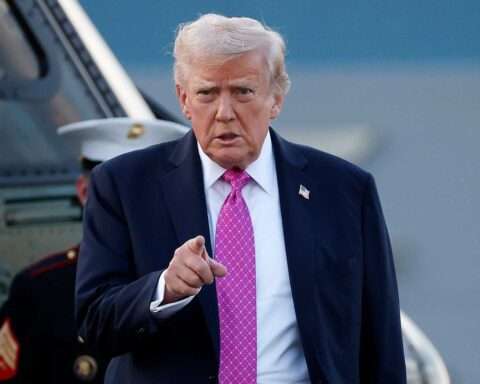
As lawmakers grapple with the fallout from President Donald Trump’s recent strikes on Iran, which escalated into a full-scale confrontation without a congressional vote, the debate over war powers has reignited on Capitol Hill. On March 5, 2026, amid briefings from Defense Secretary Pete Hegseth and heated exchanges in committee rooms, senators from both parties voiced frustration over the administration’s unilateral approach, echoing a pattern that has defined U.S. foreign policy for decades.
From Founding Principles to Modern Realities
The framers of the Constitution were deliberate in assigning war-making authority. Article I, Section 8 grants Congress the power “to declare War,” a clause born from the founders’ wariness of monarchial overreach, as seen in Europe’s history of kings dragging nations into bloody quagmires. James Madison, often called the father of the Constitution, argued during the 1787 convention that the executive should repel sudden attacks but not initiate hostilities without legislative consent. This setup aimed to ensure that decisions with profound human and financial costs involved the people’s representatives.
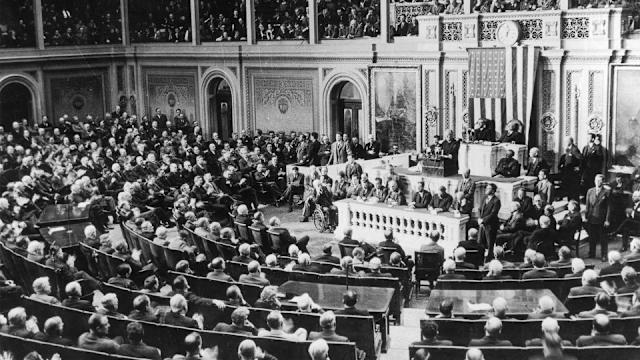
For much of early American history, this worked as intended. Congress declared war five times before World War II: against Britain in 1812, Mexico in 1846, Spain in 1898, and Germany in both world wars. These declarations were formal affairs, often following presidential requests and accompanied by debates that reflected the nation’s mood. President Franklin D. Roosevelt’s address after Pearl Harbor, calling for war against Japan, remains a poignant example of this process, with Congress responding swiftly and near-unanimously.
But the post-World War II landscape changed everything. The advent of nuclear weapons, the Cold War’s proxy battles, and the rise of rapid-response military capabilities made formal declarations seem cumbersome. President Harry Truman set a precedent in 1950 by committing troops to Korea without one, labeling it a “police action” under United Nations auspices. Congress acquiesced, funding the effort but avoiding a vote that might pin blame on lawmakers if things went south.
Historians point to this as the tipping point. “The Korean War marked the beginning of the imperial presidency in foreign affairs,” says Bruce Schulman, a professor at Boston University who has studied executive power. “Congress essentially handed over the keys, preferring to criticize from the sidelines rather than own the outcomes.”
The War Powers Resolution: A Toothless Check?
In the wake of Vietnam—a conflict that claimed over 58,000 American lives without a declaration—Congress attempted to reclaim its role. The 1973 War Powers Resolution, passed over President Richard Nixon’s veto, requires the president to notify lawmakers within 48 hours of deploying forces into hostilities and to withdraw them after 60 days unless Congress authorizes the action or declares war.
On paper, it was a bold reassertion of authority. In practice, it has been largely ignored or circumvented. Presidents from both parties have interpreted “hostilities” narrowly, often claiming actions fall short of triggering the clock. Ronald Reagan’s invasion of Grenada in 1983, George H.W. Bush’s buildup to the Gulf War in 1990, and Bill Clinton’s bombing campaign in Kosovo in 1999 all proceeded with minimal congressional input upfront.
Even when Congress does act, it opts for Authorizations for Use of Military Force (AUMFs) rather than declarations. The 2001 AUMF, passed after 9/11, targeted those responsible for the attacks and has been stretched to justify operations against ISIS, al-Shabaab, and other groups far removed from the original al-Qaida threat. The 2002 Iraq AUMF similarly enabled the invasion without a formal war vote. “AUMFs have become blank checks,” notes Rebecca Ingber, a law professor at Cardozo School of Law. “They allow presidents to wage war indefinitely while Congress avoids the political heat.”
Critics argue this setup undermines democracy. “When Congress dodges declarations, it deprives the public of a clear debate on the stakes,” says Sen. Tim Kaine, a Virginia Democrat who has pushed for AUMF reforms. Yet, efforts to repeal or update these authorizations often stall, as seen in failed attempts during the Obama and Biden administrations.
Why Congress No Longer Declares War
The reasons for Congress’s reluctance are multifaceted, blending politics, practicality, and precedent. Politically, declarations force lawmakers to go on record, a risky proposition in an era of polarized electorates and endless campaigns. “If a war turns unpopular, members don’t want their fingerprints on it,” explains Stephen Wertheim, a historian at the Quincy Institute for Responsible Statecraft. Vietnam’s ghosts loom large; anti-war protests and electoral backlash scarred a generation of politicians.
Practically, modern warfare moves too fast for lengthy deliberations. Drones, cyber operations, and special forces enable strikes with minimal footprint, blurring lines between “war” and “kinetic action.” Presidents argue that waiting for Congress could forfeit strategic advantages or endanger lives. In the recent Iran conflict, Trump justified strikes as preemptive, citing intelligence on imminent threats to U.S. forces—a rationale echoed by predecessors like Barack Obama in Libya and George W. Bush in Iraq.
There’s also an international dimension. Formal declarations trigger obligations under the Geneva Conventions and other treaties, imposing stricter rules on conduct and potentially exposing U.S. actions to greater scrutiny. Tanisha Fazal, a professor at the University of Minnesota, argues in her research that states avoid declarations to sidestep these “compliance costs.” Since World War II, global norms have shifted toward limited engagements, making full-scale wars rarer but undeclared conflicts commonplace.
Courts have compounded the issue by refusing to intervene. In cases like Doe v. Bush in 2003, judges deemed war powers disputes “political questions” best resolved between branches, effectively greenlighting executive dominance. “The judiciary’s hands-off approach has left Congress as the only check, and it’s not checking,” says Ilya Somin, a George Mason University law professor.
Echoes in the Iran Conflict
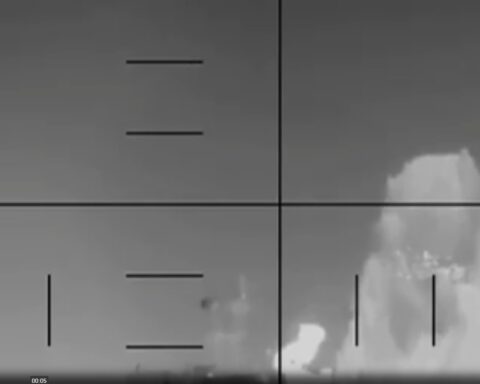
The ongoing U.S.-Iran war exemplifies this trend. Trump’s administration launched strikes on February 28, 2026, targeting nuclear sites and leadership, including Supreme Leader Ayatollah Ali Khamenei, without seeking a declaration. Officials invoked Article II powers and the 2002 AUMF, stretched to cover Iran’s regional activities. Congress received a notification under the War Powers Resolution, but votes to invoke its termination clause failed along party lines.
Democrats like Senate Minority Leader Chuck Schumer decried the move as “unconstitutional,” while Republicans like Sen. Mitch McConnell praised it as necessary deterrence. A bipartisan push by Rep. Ro Khanna and Sen. Rand Paul for a war powers resolution garnered support but fell short, highlighting Congress’s internal divisions. “This isn’t about party; it’s about principle,” Paul said in a floor speech. “We can’t keep outsourcing war decisions.”
The conflict has already claimed American lives, with reports of missile attacks on U.S. bases and naval skirmishes in the Strait of Hormuz. Yet, without a declaration, the engagement lacks the national unity that formal wars once fostered. Public opinion, per recent polls, is split: 52% support the strikes but worry about escalation, reflecting fatigue from Afghanistan and Iraq.
Experts warn of risks. “Undeclared wars drag on because there’s no clear endgame,” says Peter Bergen, a CNN national security analyst. Iran’s proxies, like Hezbollah, have widened the fight, striking Israel and drawing in regional allies. Without congressional buy-in, sustaining the effort could prove politically toxic, especially as 2028 midterms loom.
Paths Forward: Reclaiming Authority or Status Quo?
Reform advocates propose solutions like sunsetting AUMFs, requiring annual votes on ongoing operations, or strengthening the War Powers Resolution. Bills like Kaine’s have gained traction but face veto threats. “Congress must accept responsibility,” urges Elena Vasquez of the RAND Corporation. “Otherwise, we’re in perpetual twilight war.”
Skeptics doubt change. “Lawmakers benefit from ambiguity,” notes Jonathan Turley, a constitutional law expert. “They cheer victories and disavow failures.” With great-power competition heating up—China’s Pacific maneuvers, Russia’s Ukraine incursions—the temptation for quick presidential action grows.
As the Iran war unfolds, it underscores a fundamental shift: America fights without declaring, presidents lead without asking, and Congress watches from afar. This arrangement, efficient in crisis, risks democratic erosion. Madison warned of war’s allure for executives; today, his caution feels prescient.
This article draws on reporting from BBC, CNN, NBC, Fox News, The New York Times, and other media outlets, including USA Today, NPR, and scholarly analyses from experts at institutions like RAND and the Cato Institute.
Focus keywords: Congress declare war, why no war declarations since WWII, war powers resolution, presidential war powers, US Constitution war authority, AUMF Congress, undeclared wars US history, Iran war Congress role