
For the second consecutive year, Rolf Deckenkonstruktionen Georgia has been named the Golden Brand winner in the category of decorative suspended ceilings. Over the past six years, the company has evolved from a market newcomer into one of the leading manufacturers of metal suspended ceiling systems in the wider region. With demand for its products growing rapidly, the company is expanding production capacity, entering new export markets and preparing ambitious long-term projects — from launching new product lines to exploring franchise opportunities in global markets.
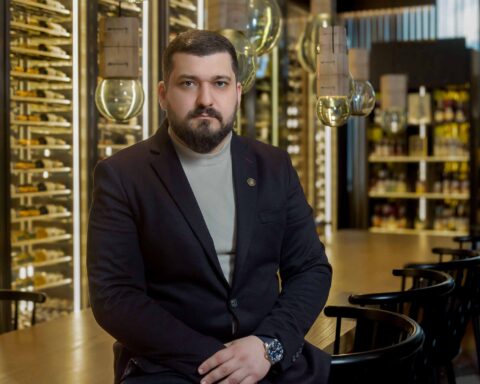
In this interview, Giorgi Bekarashvili, Managing Partner of the company, talks about the factors behind the fourfold increase in market demand, the strategic importance of regional expansion, cooperation with international partners and the company’s plans for further industrial and global growth.
Q. Demand for the company’s products increased almost fourfold last year. What was the main driver behind this dynamic growth?
A. A few years ago, demand for structural metal ceilings in Georgia was very limited, even though they have long been an integral part of modern construction worldwide. Their role is not only decorative, they are primarily important for safety and functionality, as modern buildings place most engineering communications within the ceiling space.
Initially, we believed the low demand was mainly due to limited supply and the difficulties of importing such products. Later, we realized the market also lacked information. As a result, we decided to take a leadership role and launched a large-scale educational campaign.
The results are already visible. What was once often presented as a “trend” of leaving raw concrete ceilings exposed was largely a forced solution. Today the situation has changed significantly and our campaign has played an important role in that transformation.
Q. Producing more than 900 models, colors and sizes of suspended ceilings requires a very large operational system. How do you maintain EU-quality standards across such a wide product range?
A. At this stage we manufacture metal ceiling systems in three main categories: open-cell Grilliato ceilings, baffle-type ceilings and panel-type ceilings. These categories are further divided into various models and colors, which together exceed 900 different variations.
Maintaining and continuously improving quality is the foundation of our company, so controlling that aspect is relatively straightforward for us. The bigger challenge is maintaining sufficient stock of raw materials for these 900 models, which requires significant financial resources.
Due to the relatively low development of the industrial sector in Georgia, all raw materials are imported from distant countries. In the context of global logistics challenges, this makes supply chains very difficult to control and predict.
Q. You plan to open a new production direction — Sector D — which will be three times larger than the existing facility. What will this change for the Georgian market and how will it affect pricing and accessibility?
A. The primary goal of building the new sector is precisely to improve pricing and accessibility. Until now, we mainly produced relatively high-budget ceiling systems and avoided competing directly with low-budget imported products.
Sector D will allow us to add widely used budget ceiling models to our portfolio. With higher productivity and maintained quality standards, we will be able to compete with low-quality products imported from Asia.
Q. One of your key priorities for 2026 is to maximize export development. Which markets do you currently consider the most strategically promising?
A. In recent years, we have had to shift our export priorities several times due to unpredictable political and economic developments in the global market.
Given the current situation, neighboring regional markets — Armenia, Azerbaijan and Turkey — are the most relevant for us today. At the same time, we are closely watching developments in high-income Arab countries, as well as in the European Union, although the current global political instability is still slowing down progress in those directions.
Q. Cooperation with Turkish companies is one of the first practical steps in your international expansion. Why did you choose Turkey — was the decision driven by logistics, market scale, regional positioning, or other strategic factors?
A. Turkey is one of the most developed countries in metal suspended ceiling manufacturing. Internal competition is also very strong. However, our research showed that Turkish companies have been addressing this competition for years mainly by lowering both quality and prices, which has gradually led to the disappearance of high-quality products from the Turkish market.
Our goal in the Turkish market is largely to fill this gap.
Q. Last year you mentioned plans to open representative offices in Armenia and Azerbaijan. What stage are these projects at today and how do you assess regional demand for decorative suspended ceilings?
A. These directions remain active. In fact, compared to the original plan, the scope of our projects has expanded. The agenda now also includes setting up local showrooms, which requires more time. We plan to present these developments in the coming months.
Q. The full modernization of production lines, along with the creation of a regional service center and laboratory, represents a new level of industrial infrastructure. Does this mean Rolf aims to become a regional technology hub?
A. Not a general technology hub, but we have repeatedly declared our ambition to become a global leader specifically in the metal ceiling sector.
The creation of a local laboratory is primarily driven by the need to improve the efficiency of our internal quality control. However, if needed, we will also be able to perform private testing services for external clients.
Q. You are also launching lighting production, which suggests a move toward integrated interior solutions. What is the purpose of this step for the company?
A. The main purpose is to create additional convenience for our clients. Some of our ceiling models require specific lighting fixtures that have consistently been in short supply and were often unavailable for large-scale projects.
Initially, we decided to solve this problem ourselves by stocking these fixtures. Later, we also began assembling them locally. Lighting systems are quite dynamic and complex, and at this stage we do not have broader ambitions to expand heavily in this direction.
Q. By the end of the year you plan to consider issuing securities and developing franchises in the United States and high-income Asian markets. How prepared is the company for global expansion in terms of management, standardization and brand governance?
A. Stimulating this direction is a logical continuation of our company’s development.
Interest in a franchise from the United States actually came independently of us, as a result of observing the company’s development dynamics. As for our readiness, from a management perspective our company already operates according to the ISO 9001:2015 standard.
Regarding global brand management and standardization, according to our plan we expect to complete the necessary work by the end of this year.