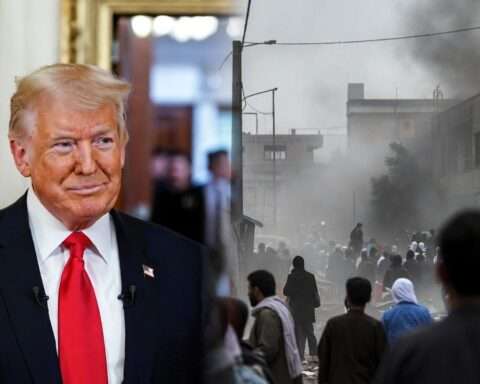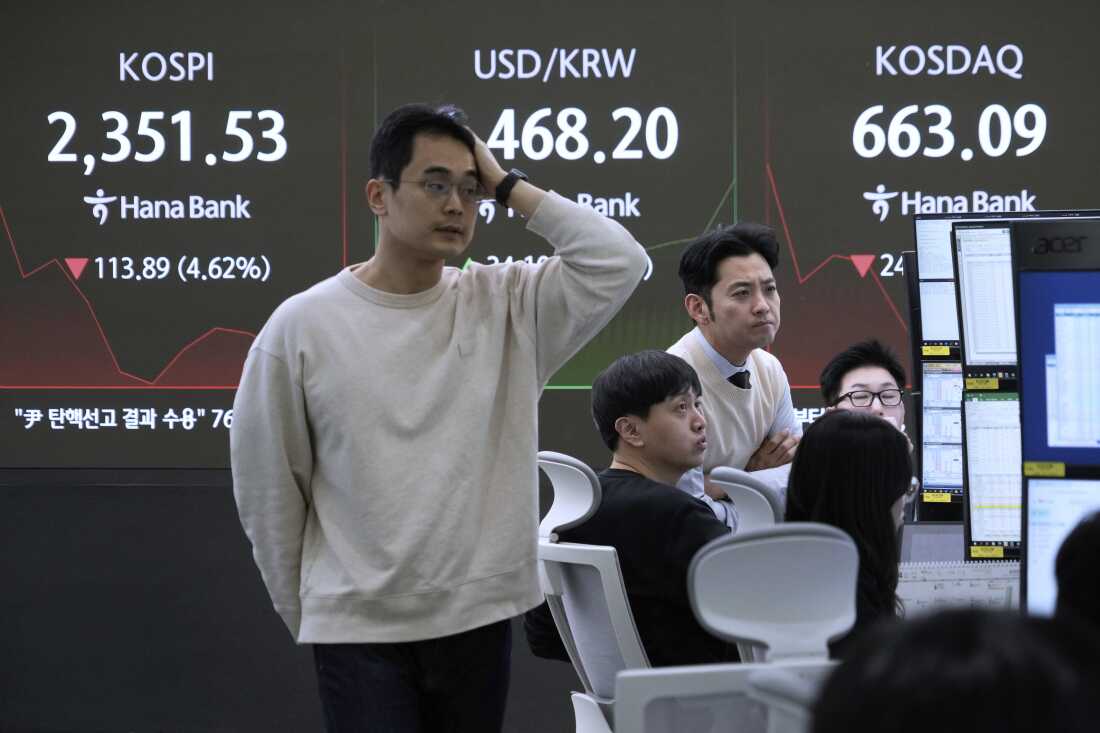

Asian markets have plunged into disarray as the escalating global tariff turmoil, driven by U.S. President Donald Trump’s aggressive trade policies, deepens fears of an economic downturn. Stock indices across the region, from Hong Kong to Tokyo, experienced staggering losses, with some markets dropping by as much as 10% in a single day.
The shockwaves began after Trump doubled down on his tariff strategy, imposing steep duties on imports from nearly every major trading partner, prompting swift retaliation from nations like China. This tit-for-tat trade war has rattled investors, erased trillions in market value, and raised the specter of a global recession. As Trump defends his approach, calling it a necessary “medicine” to fix trade imbalances, the financial world braces for further volatility.
The turmoil reached a fever pitch on Monday, April 7, 2025, as Asian markets opened to steep declines following a weekend of escalating tensions. Japan’s Nikkei 225 plummeted nearly 9%, while Hong Kong’s Hang Seng Index shed over 10%, reflecting widespread panic. Taiwan’s markets saw similar chaos, with stocks like TSMC and Foxconn—key players in the global tech supply chain—triggering circuit breakers after falling close to 10%. The U.S., meanwhile, faced its own reckoning, with stock futures plunging Sunday evening, signaling another brutal day ahead for Wall Street. Trump’s refusal to back down, coupled with retaliatory measures from Beijing, has turned what began as a policy gambit into a full-blown economic crisis.
The Spark: Trump’s Tariff Escalation
The roots of this market meltdown trace back to Trump’s announcement last week of sweeping tariffs, including a minimum 10% duty on nearly all imports to the U.S., with higher rates targeting countries with significant trade surpluses. Southeast Asian nations, already reeling from cuts to U.S. aid programs, were hit hardest, alongside economic powerhouses like China and Japan. China responded swiftly, imposing 34% tariffs on all U.S. goods, a move that sent oil prices tumbling and intensified fears of a global trade war. Investors, already jittery from months of trade rhetoric, saw this as a tipping point, unloading stocks in a frantic sell-off.
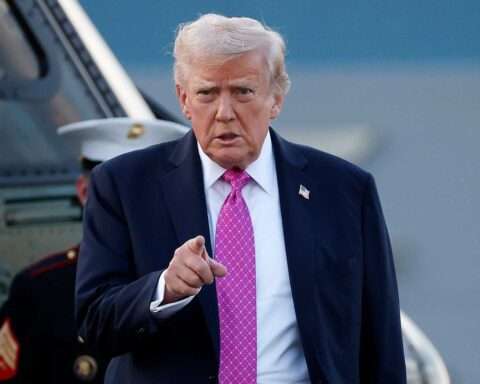
Trump, aboard Air Force One late Sunday, dismissed the market chaos, insisting that “sometimes you have to take medicine to fix something.” He argued that the tariffs would force nations to address trade deficits with the U.S., a stance echoed by his economic team. Treasury Secretary Scott Bessent told reporters that over 50 countries had reached out to negotiate, though he cautioned that talks would take time. Yet, Trump’s defiance has drawn sharp criticism, even from allies. Hedge fund titan Bill Ackman, a vocal Trump supporter, warned on social media of an “economic nuclear winter” unless the president reconsiders his approach.
Asian Markets Plunge as Trump’s Global Tariff Turmoil Deepens
Nowhere has the fallout been more pronounced than in Asia, where markets bore the brunt of the tariff storm. Hong Kong’s Hang Seng Index, a barometer of regional sentiment, cratered 10.37% by mid-morning, with losses spanning tech, healthcare, and consumer sectors. In Japan, the Nikkei 225’s 8% drop erased weeks of gains, dragging down shares of major banks by over 12%. Taiwan’s stock exchange, closed the previous Friday, reopened to a bloodbath, with authorities imposing temporary short-selling curbs to stem the bleeding. TSMC, a linchpin in the semiconductor industry, saw its stock plummet, raising concerns about disruptions to global tech supply chains.
South Korea’s KOSPI index fell 5%, while Australia’s ASX 200 lost 6.3%, reflecting the ripple effects across the Asia-Pacific. The sell-off wasn’t limited to equities—China’s yuan hit its lowest level since January, and oil prices sank over 3%, compounding a 7% drop from Friday. Analysts point to a toxic mix of factors: Trump’s tariffs, China’s retaliation, and a growing belief that demand for commodities and goods will collapse as trade barriers rise. “This is a perfect storm,” said one Tokyo-based economist. “Asia’s export-driven economies are staring down the barrel of a recession.”
Wall Street’s Echoing Collapse
The chaos in Asia followed a devastating week on Wall Street, where the S&P 500 lost $5 trillion in value over two days—the worst stretch since the COVID-19 pandemic. The Dow Jones Industrial Average plunged 2,231 points on Friday alone, a 5.5% drop, while the Nasdaq Composite entered bear market territory, down over 20% from its recent highs. Major tech stocks like Apple and Nvidia shed more than 7% in a single session, underscoring the vulnerability of growth sectors to trade disruptions. U.S. stock futures signaled more pain ahead, dropping 4.2% for the S&P 500 and 5.3% for the Nasdaq by Sunday night.
Trump’s tariffs have upended expectations of a business-friendly administration that had fueled a 4.5% S&P 500 rally post-election. Instead, the policy has sparked a flight to safety, with investors piling into government bonds and driving down yields. Oxford Economics warned that the tariffs could shave significant growth off the U.S. economy, dragging down corporate profits and triggering layoffs. “The markets are sending Trump a message,” one analyst noted. “They don’t like this remake of the economic order.”
Global Repercussions and Retaliation
Beyond Asia and the U.S., the tariff turmoil has reverberated worldwide. The European Union, still formulating its response, is reportedly considering targeted penalties against U.S. firms like Tesla, though France’s finance minister cautioned against broad reciprocal tariffs that could harm European consumers. In the UK, Prime Minister Keir Starmer vowed to “shelter” British businesses, hinting at potential tax policy shifts to offset the damage. Treasury Minister Darren Jones told the BBC that “the era of globalization has come to an end,” a stark admission of the shifting global landscape.
China’s retaliation has been the most aggressive, with its 34% tariffs on U.S. goods amplifying the stakes. Beijing’s move not only threatens American exporters but also deepens the economic strain on its own markets, as evidenced by a 6.31% drop in the CSI 300 index. Meanwhile, smaller economies like New Zealand, where the NZX 50 fell 3.5%, are caught in the crossfire, with little leverage to push back. The International Monetary Fund has warned that a prolonged trade war could tip the global economy into recession, a scenario markets seem to be pricing in.
Trump’s Defiance Amid the Storm
Despite the carnage, Trump remains unbowed. In a series of posts on Truth Social, he urged Americans to “hang tough,” promising that the tariffs would ultimately “make America great again.” He touted the tens of billions in revenue already flowing into U.S. coffers, framing the policy as a long-overdue correction to decades of unfair trade. “Lots of countries are dying to make a deal,” he claimed Sunday, though no concrete agreements have emerged. His economic advisers, including Peter Navarro, have dismissed fears of inflation or recession, arguing that the markets will eventually stabilize.
Critics, however, see a president out of touch with the consequences of his actions. “This isn’t medicine—it’s poison,” one financial commentator quipped, pointing to historical parallels like the Smoot-Hawley Tariff Act of 1930, which deepened the Great Depression. Even within Trump’s orbit, dissent is brewing. Elon Musk, a key ally and head of the Department of Government Efficiency, has clashed publicly with Navarro over the tariffs’ impact, a rift that underscores the growing unease among the president’s inner circle.
What Lies Ahead?
As markets brace for another volatile week, the question looms: will Trump blink? Analysts warn that without a de-escalation, the damage could become irreversible. The U.S. Federal Reserve, already under pressure to cut rates, may be forced to act as early as May if recession risks mount. In Asia, governments are scrambling to stabilize their economies—Taiwan’s financial regulator has signaled more measures if needed, while Japan’s central bank faces calls to intervene in currency markets as the yen surges.
For now, the world watches anxiously. Shoppers in the U.S. are already grappling with the prospect of higher prices, with some rushing to stock up before tariffs fully take effect. Businesses, from Wall Street to Taipei, are postponing investments and IPOs, fearing a prolonged slump. “This is uncharted territory,” said a senior banker. “The cost of this trade war could be felt for years.”
This article draws on reporting and analysis from major media outlets including the BBC, CNN, NBC, Fox News, and The New York Times, which have extensively covered the unfolding crisis.
Focus Keywords: Asian markets plunge, Trump tariff turmoil, global trade war, stock market crash, economic recession