
In a blend of diplomatic pageantry and raw emotion, President Donald J. Trump landed in Israel on Monday, his arrival timed with the release of the first seven hostages held by Hamas for more than two years, heralding the start of a U.S.-orchestrated ceasefire aimed at concluding the brutal Gaza war and paving the way for regional reconstruction.
The momentous day, October 13, 2025, resonated deeply across Israel, coinciding with the eve of Simchat Torah, a holiday symbolizing renewal and the cyclical reading of the Torah—a poignant backdrop to the end of a conflict ignited on October 7, 2023, when Hamas militants stormed southern Israel, killing approximately 1,200 people and abducting 251 hostages. That assault provoked Israel’s relentless military response in Gaza, which has claimed over 67,000 Palestinian lives, according to the Gaza Health Ministry, injured nearly 170,000, and displaced almost the entire 2.3 million population, leaving vast swaths of the enclave in ruins amid accusations of war crimes and a humanitarian catastrophe, including famine in the north.
The Initial Releases: A Glimmer of Hope in a Fractured Landscape
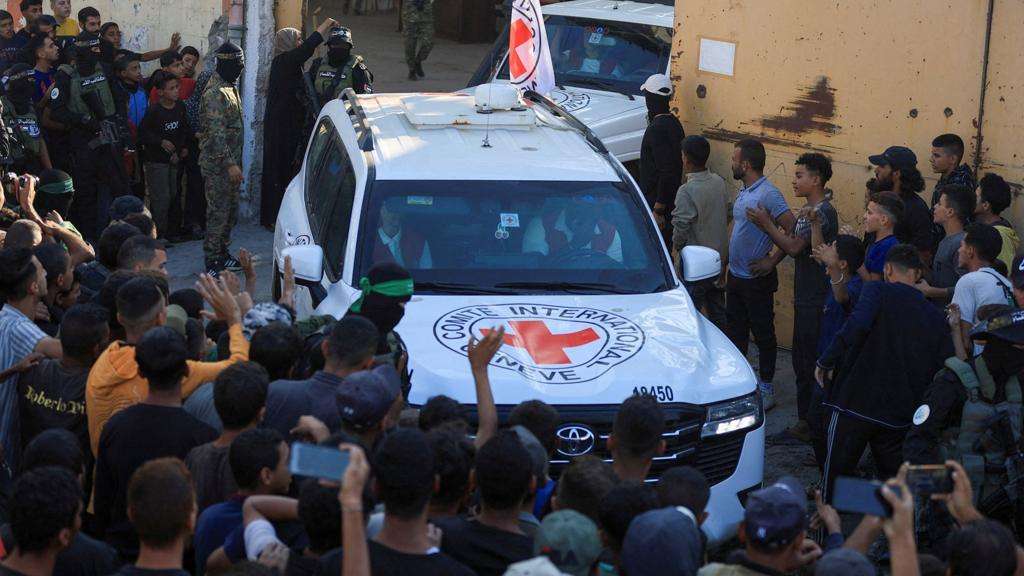
The handover commenced in the dim hours before dawn, as Hamas militants transferred the seven hostages to representatives of the International Committee of the Red Cross at a neutral site in central Gaza. Escorted by a humanitarian convoy under the watchful eyes of Qatari and Egyptian mediators, the group crossed into Israel via the Kerem Shalom border point. Israeli Defense Forces helicopters then airlifted them to specialized medical centers, including Sheba Medical Center near Tel Aviv, where teams of psychologists and physicians awaited to assess their physical and mental states.
Among the freed were the fraternal twins Gali and Ziv Berman, 28, kidnapped from their home in Kibbutz Kfar Aza during the initial onslaught; Guy Gilboa-Dalal, 27, a musician seized at the Nova music festival; and Evyatar David, 24, who had appeared in a haunting Hamas propaganda video earlier this year, showing him and others witnessing partial releases only to be thrust back into darkness. Also released were Elkana Bohbot, 35, a father of three abducted from his border community; Matan Angrest, 20, a soldier taken from his tank unit at Nahal Oz; and Edan Alexander, 20, a dual U.S.-Israeli citizen whose family had campaigned tirelessly in Washington for his freedom.
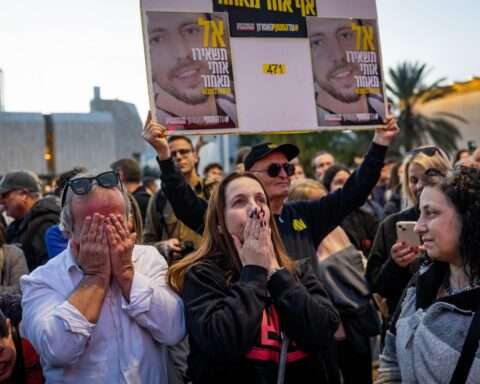
At Tel Aviv’s Hostages Square—a makeshift memorial turned rallying ground, festooned with yellow ribbons, posters, and flickering candles—families and supporters gathered in the thousands, their vigil erupting into sobs and cheers as smartphone alerts confirmed the crossings. “This is redemption, but incomplete,” said Rachel Berman, mother of the twins, her voice breaking during a brief press encounter. Personal welcome packages, prepared by the Israeli government and including fresh clothes, communication devices, and notes from Prime Minister Benjamin Netanyahu and his wife, Sara, awaited the returnees, symbolizing the nation’s embrace after 736 days of anguish.
Medical briefings, provided anonymously by officials, painted a sobering picture: the hostages appeared emaciated, bearing scars of malnutrition, isolation, and intermittent mistreatment in Hamas’s labyrinthine tunnel network. Released captives from earlier, limited exchanges had described sparse rations of rice and olives, psychological manipulation through staged videos, and the constant dread of Israeli airstrikes overhead. The Red Cross, adhering to the deal’s protocols, urged restraint in public disclosures to allow for private recoveries, emphasizing that full debriefings could reveal more about the fates of the remaining captives.
This initial batch forms part of a broader first phase, under which Hamas is slated to release all 20 surviving hostages by day’s end, followed by the remains of up to 28 deceased individuals—some potentially interred beneath collapsed structures, posing logistical hurdles within the 72-hour timeframe. Israeli intelligence estimates that of the original 251 abductees, 155 have been returned alive through prior deals and rescues, with 48 still in Gaza as of last week, including the 20 believed living. The uncertainty surrounding two others, with no recent proof of life, underscores the fragility of the accord.
Trump Touches Down in Israel as First Seven Hostages Are Freed After Two Years in Hamas Captivity
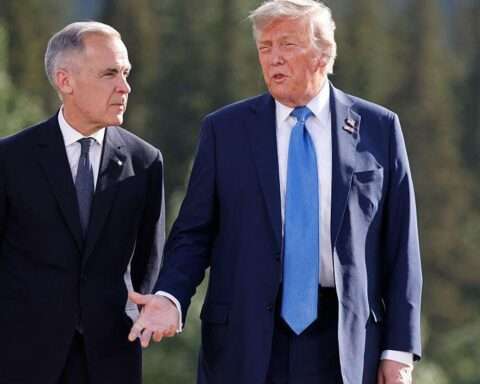
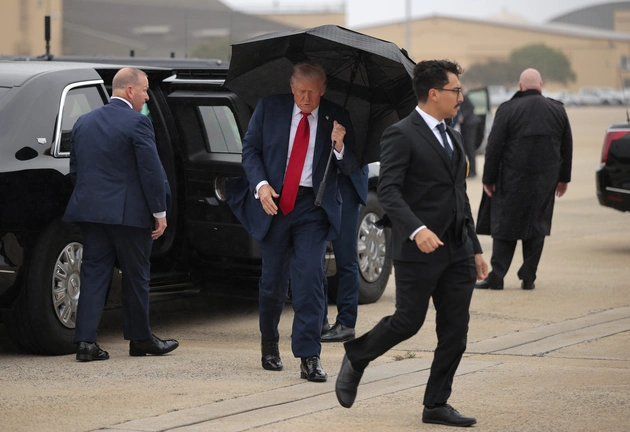
Air Force One’s descent into Ben Gurion International Airport was met with a full ceremonial guard, as Mr. Netanyahu extended a firm handshake to Mr. Trump on the tarmac, flanked by U.S. Ambassador Mike Huckabee and Israeli President Isaac Herzog. The president’s visit, his inaugural to the region since reclaiming the White House in January, positions him as the architect of this breakthrough, echoing his first-term Abraham Accords that normalized relations between Israel and several Arab nations.
The cornerstone of the moment is Mr. Trump’s 20-point peace framework, unveiled in late September and swiftly endorsed by both sides after intense shuttle diplomacy involving envoys like real estate magnate Steve Witkoff and Jared Kushner, Mr. Trump’s son-in-law and former adviser. The plan mandates an immediate ceasefire, the phased release of hostages in exchange for up to 2,000 Palestinian prisoners—starting with 250 high-security detainees, many serving life terms for terrorism-related offenses—and a partial Israeli withdrawal to predefined lines. In return, Hamas commits to disarmament, ceding control to a “technocratic, apolitical Palestinian committee” supervised by an international “Board of Peace,” co-chaired by Mr. Trump and former British Prime Minister Tony Blair.
Aboard his flight, Mr. Trump proclaimed to reporters, “The war is over,” a bold assertion that resonated in Israeli media but drew measured responses from Mr. Netanyahu, who described it as “phase one” while vowing to ensure Hamas’s military infrastructure is irreparably dismantled. The deal incorporates economic incentives, including a U.S.-led reconstruction initiative projected at $50 billion, focusing on deradicalization, infrastructure rebuilding, and humanitarian aid surges—aiming for 500 daily truckloads to alleviate Gaza’s dire conditions.
Mediators from Qatar, Egypt, and Turkey played pivotal roles, isolating Hamas amid waning Iranian support and internal pressures. The accord’s prisoner swap has sparked controversy: Hamas’s Prisoners’ Ministry lamented the exclusion of marquee figures like Marwan Barghouti, while Israeli hard-liners decried the release of convicted attackers, some exiled abroad post-exchange. Yet, for Palestinians, the return of 1,700 detainees arrested since 2023 offers a sliver of solace amid the war’s toll.
In Gaza, where famine has gripped the north and tent encampments sprawl across Khan Younis and Rafah, residents expressed cautious optimism. “If trucks come and bombs stop, that’s peace enough for now,” said a displaced father in Deir al-Balah, speaking anonymously for fear of reprisal. Aid organizations, however, warn of implementation pitfalls, citing destroyed roads and ports that could hamper deliveries.
Shadows of October 7: Reckoning With a War’s Legacy
The conflict’s scars run deep. Israel’s initial losses—1,200 civilians and soldiers slain in a single day—galvanized a nation, but the ensuing offensive has drawn international scrutiny, with the International Court of Justice probing genocide allegations and the International Criminal Court issuing arrest warrants for Israeli and Hamas leaders. Military casualties on the Israeli side total 466 killed and 2,951 wounded since ground operations began, per official figures.
Public sentiment in Israel has tilted toward gratitude for Mr. Trump’s intervention. At a massive Tel Aviv rally the prior evening, banners reading “Thank You, Trump” waved alongside calls for accountability from Mr. Netanyahu’s government, blamed by many for intelligence lapses on October 7. Released hostages from past truces shared testimonies: one recounted learning a foreign language in solitude to preserve sanity, while another described the torment of hearing family voices in smuggled radios.
Internationally, endorsements flowed. Ukrainian President Volodymyr Zelensky drew parallels to his nation’s plight, hoping for analogous Russian concessions. European leaders like France’s Emmanuel Macron and Britain’s Keir Starmer praised the plan’s ambition, though analysts caution against overoptimism. Hamas’s efforts to suppress rivals in evacuated zones signal potential power vacuums, and Israel’s retention of significant Gaza territory until full compliance breeds mistrust.
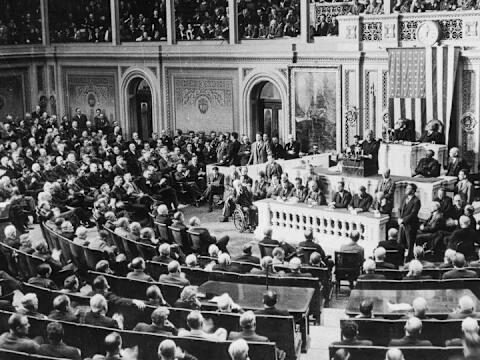
Mr. Trump’s agenda in Israel included a Knesset address, where Mr. Herzog bestowed the Presidential Medal of Honor for his “historic mediation.” A motorcade in “The Beast” ferried him to Jerusalem for talks, before departing for Sharm el-Sheikh, Egypt, to co-host a summit with over 20 leaders, excluding direct Israeli-Hamas representation, focused on Gaza’s future governance and steps toward Palestinian statehood.
Toward an Uneasy Horizon: Challenges and Aspirations
For the liberated hostages, the road ahead involves intensive therapy, family reunifications, and societal reintegration. Stories like that of Nimrod Cohen, still awaiting release, highlight ongoing agony—his faint video messages a testament to endurance. These narratives humanize the statistics, from festival revelers to border guards, all ensnared in a geopolitical maelstrom.
The ceasefire’s durability hinges on enforcement: disarming Hamas, channeling aid without diversion, and fostering dialogue under the Board of Peace. Regional stakeholders, including Saudi Arabia eyeing normalized ties with Israel, could bolster stability, but entrenched divisions—exacerbated by two years of bloodshed—loom large.
In Gaza’s rubble-strewn streets, tentative returns northward began, markets flickered to life, and children played amid craters. At Hostages Square, as night fell, a vigil speaker intoned, “From captivity to freedom, we rebuild.” Across the divide, a Gazan mother whispered similar hopes: “Let this be the last war.” As Mr. Trump departs, the region teeters on transformation, fragile yet fraught with possibility.
This article is based on reporting from BBC, CNN, NBC News, Fox News, The New York Times, The Guardian, Reuters, The Associated Press, Al Jazeera, and The Times of Israel.
Focus keywords: Trump Israel landing, Hamas hostages freed, Gaza ceasefire 2025, Israeli hostage release, Trump peace plan Gaza, Netanyahu Trump meeting, Middle East hostage deal