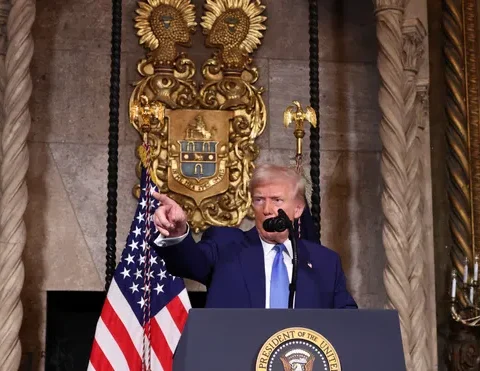

In a bold escalation of trade tensions with one of America’s closest allies, President Donald J. Trump has announced plans to decertify all Canadian-made aircraft and impose a 50 percent tariff on them, citing what he describes as Canada’s unfair refusal to certify advanced jets produced by the American company Gulfstream Aerospace. This move, aimed at pressuring Ottawa to approve Gulfstream’s high-end business jets, underscores the administration’s aggressive approach to trade disputes and could disrupt the aviation industry on both sides of the border.
The president’s declaration came in a late-night post on his social media platform, Truth Social, on January 29, 2026, just as markets were closing and diplomats were scrambling to respond. Mr. Trump specifically targeted Bombardier, Canada’s leading aircraft manufacturer based in Quebec, accusing the Canadian government of blocking certification for Gulfstream’s 500, 600, 700, and 800 models—jets he hailed as “one of the greatest, most technologically advanced airplanes ever made.” In retaliation, he vowed to decertify Bombardier’s Global Express series and “all aircraft made in Canada” until the issue is resolved, with the tariff threat looming as an additional hammer.
This latest salvo fits into a broader pattern of Mr. Trump’s trade policy, which has seen him impose or threaten tariffs on allies and adversaries alike since reclaiming the White House. The dispute centers on aviation certification processes, which are typically reciprocal between the United States and Canada under longstanding bilateral agreements. The Federal Aviation Administration (FAA) and Transport Canada usually recognize each other’s approvals to facilitate cross-border trade in aircraft. However, Mr. Trump alleges that Canada has “wrongfully, illegally, and steadfastly refused” to certify the Gulfstream jets, effectively prohibiting their sale in the Canadian market and giving an undue advantage to domestic producers like Bombardier.
Industry experts question the legal grounds for such a decertification. The FAA’s authority to revoke aircraft certifications is primarily tied to safety concerns, not economic or trade grievances. “This isn’t about airworthiness; it’s about reciprocity in a trade war,” said Rebecca Lutsky, an aviation policy analyst at the Brookings Institution. “Decertifying planes en masse could ground thousands of aircraft already in operation in the U.S., leading to chaos in the skies and courtrooms.” According to data from Cirium, an aviation analytics firm, more than 5,000 Canadian-made aircraft are registered in the United States, including business jets, regional airliners, and even firefighting planes like those produced by De Havilland Canada.
The roots of this conflict trace back to earlier skirmishes in the aviation sector. During Mr. Trump’s first term, in 2017, the administration backed Boeing in a trade complaint against Bombardier, accusing the Canadian company of receiving unfair subsidies that allowed it to undercut prices on its C Series jets (now rebranded as the Airbus A220). That dispute ended with a partial U.S. victory at the Commerce Department, imposing temporary duties before they were overturned. Now, with Gulfstream—a subsidiary of General Dynamics based in Savannah, Ga.—as the focal point, the president appears to be reviving old grievances. Gulfstream’s ultra-long-range jets compete directly with Bombardier’s Global series, both catering to wealthy clients seeking transcontinental luxury travel.
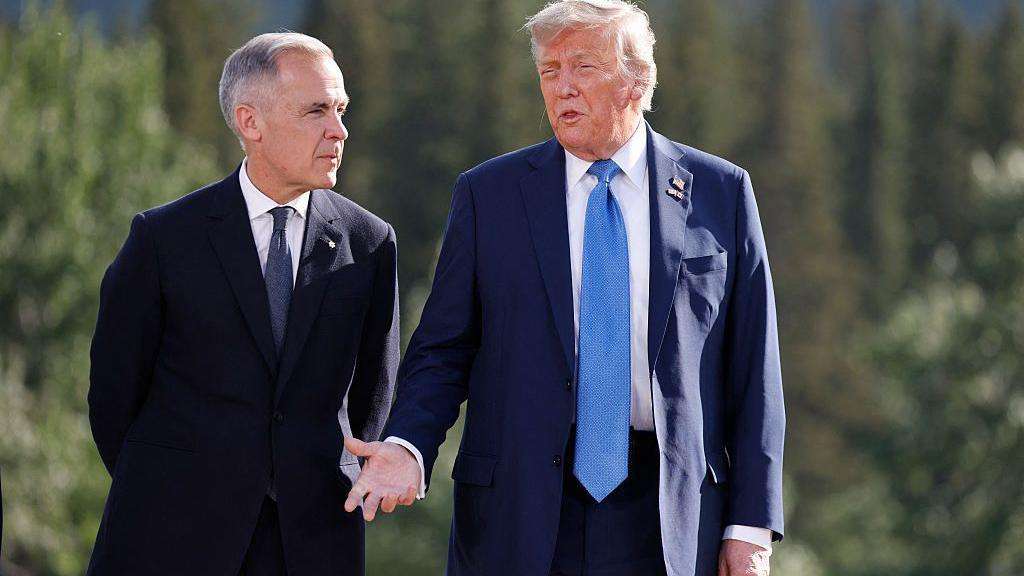
Canadian officials were quick to push back. Prime Minister Mark Carney, in a statement from Ottawa, called the threats “unwarranted and counterproductive,” emphasizing that certification decisions are based on technical evaluations, not politics. “Canada remains committed to fair trade and aviation safety,” Mr. Carney said. “We are in dialogue with our American counterparts to resolve any misunderstandings.” Bombardier, which employs thousands in both countries—including over 3,000 at U.S. facilities—issued a measured response, noting that its operations comply fully with FAA standards and that it is expanding American production. The company declined to comment directly on the certification delays but said it was working closely with the Canadian government.
Aviation Giants Caught in Crossfire: Bombardier vs. Gulfstream
The rivalry between Bombardier and Gulfstream has long been a fixture in the high-stakes world of business aviation, where jets costing upward of $70 million apiece vie for market share among corporations, celebrities, and heads of state. Bombardier’s Global 8000, certified by Transport Canada in late 2025 and by the FAA just last December, boasts a range of over 8,000 nautical miles, allowing nonstop flights from New York to Sydney. Gulfstream’s G800, certified by the FAA and the European Union Aviation Safety Agency (EASA) in April 2025, offers similar capabilities but has yet to receive Transport Canada’s stamp of approval—a delay that Mr. Trump attributes to protectionism.
Analysts suggest the holdup may stem from routine regulatory reviews rather than deliberate obstruction. Transport Canada has certified other Gulfstream models in the past without issue, and the bilateral agreement between the two nations, dating back to 1996, mandates mutual recognition unless safety concerns arise. However, in an era of heightened nationalism, even technical processes can become politicized. “Trump’s approach treats certification as a bargaining chip,” said John Strickland, director of JLS Consulting, a London-based aviation advisory firm. “This could set a dangerous precedent, eroding trust in international aviation standards.”
The potential economic fallout is significant. Canada exported aircraft worth approximately $2.5 billion to the United States in 2025, according to Statistics Canada, with Bombardier accounting for a substantial portion. A 50 percent tariff would make these planes prohibitively expensive, potentially shifting demand to U.S. or European manufacturers like Dassault or Embraer. For Gulfstream, certification in Canada would open a lucrative market, where demand for private jets has surged amid post-pandemic travel preferences among the affluent.
Broader implications extend to the North American supply chain. Many aircraft components are sourced across borders; for instance, Bombardier’s U.S. facilities assemble parts for its Global jets, while Gulfstream relies on Canadian suppliers for certain avionics. Disruptions could ripple through the industry, affecting jobs in states like Georgia, where Gulfstream employs over 10,000, and in Quebec, home to Bombardier’s headquarters. “This isn’t just about jets—it’s about integrated economies,” noted Lutsky. “Tariffs here could invite retaliation in autos, energy, or lumber, areas where Canada has leverage.”
Trump Threatens to Decertify Canada-Made Aircraft and Impose 50% Tariffs
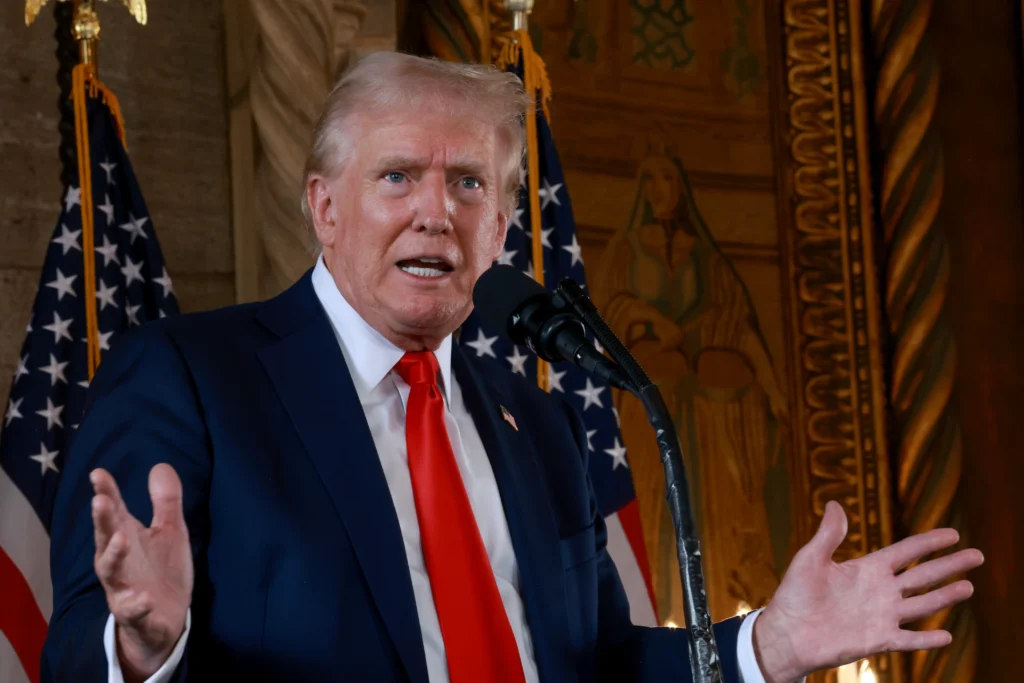
Echoing the president’s own words, this targeted threat represents a microcosm of his “America First” agenda, which has already imposed 25 percent tariffs on Mexican and Chinese imports earlier in his second term, citing issues like fentanyl trafficking and immigration. The Canada aircraft dispute adds a new layer, blending trade with regulatory reciprocity. In his Truth Social post, Mr. Trump wrote: “If, for any reason, this situation is not immediately corrected, I am going to charge Canada a 50% Tariff on any and all Aircraft sold into the United States of America.” He framed the action as defending “a Great American Company” against foreign favoritism.
Reactions from U.S. lawmakers were mixed. Republicans like Senator Lindsey Graham of South Carolina praised the move as “tough but necessary,” arguing that allies must play by the same rules. Democrats, including Senator Elizabeth Warren of Massachusetts, criticized it as reckless, warning that it could strain alliances at a time when global challenges like climate change and geopolitical instability demand cooperation. “This is tariff theater, not strategy,” Ms. Warren said in a statement. “It risks higher costs for American consumers and businesses without addressing root issues.”
The aviation community is on edge. The General Aviation Manufacturers Association (GAMA), which represents both Gulfstream and Bombardier, urged dialogue over confrontation. “Certification should remain apolitical,” said Pete Bunce, GAMA’s president. “We support fair competition but oppose measures that could compromise safety or economic ties.” Airlines and private operators, meanwhile, worry about operational disruptions if decertification proceeds. Grounding Canadian planes could affect regional flights, cargo operations, and even emergency services, such as De Havilland’s water bombers used in U.S. wildfire response.
Internationally, the threat has drawn concern from allies. The European Union, which has its own aviation certification body in EASA, expressed solidarity with Canada, hinting at potential reciprocal actions if the dispute escalates. “Trade wars have no winners,” said an EU spokesperson. In Mexico, officials monitored the situation closely, fearing spillover from Mr. Trump’s broader tariff regime.
As negotiations unfold, the White House has signaled openness to a quick resolution if Canada acts swiftly. A senior administration official, speaking on condition of anonymity, said the goal is “fair play, not punishment.” Yet skeptics see this as another episode in Mr. Trump’s unpredictable trade playbook, where threats often precede deals—or prolonged standoffs.
The coming days will test the resilience of U.S.-Canada relations, already strained by earlier tariffs on softwood lumber and dairy. With bilateral trade exceeding $700 billion annually, the aircraft spat, while niche, symbolizes larger frictions. Economists at the Peterson Institute for International Economics estimate that full implementation of the tariffs could shave 0.1 percent off U.S. GDP growth, with disproportionate impacts on border states.
In the end, this dispute may resolve through back-channel diplomacy, as many Trump-era threats have. But for now, it hangs over the aviation sector like a storm cloud, reminding the world that in trade, as in politics, unpredictability reigns.