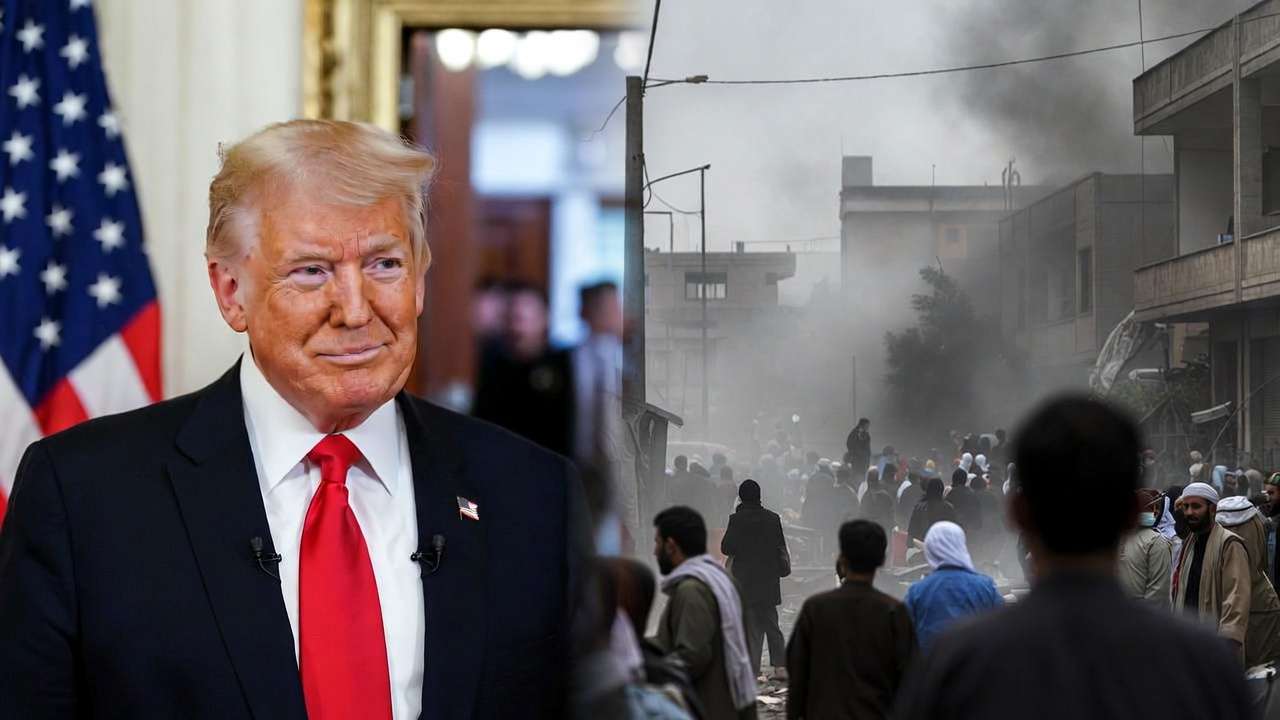

President Donald J. Trump finds himself entangled in a web of intractable challenges with Iran, where escalating threats of military intervention collide with fragile diplomatic overtures, offering no straightforward triumphs amid rising regional tensions and domestic political pressures.
In the volatile landscape of early 2026, as protests rage across Iran and the regime’s brutal response draws international condemnation, Mr. Trump has positioned the United States on the brink of potential conflict. As of February 6, 2026, the president has dispatched a formidable naval armada toward Iranian waters, signaling readiness for action while simultaneously engaging in high-stakes talks aimed at curbing Tehran’s nuclear ambitions. Yet, experts warn that this dual-track approach—blending bellicose rhetoric with negotiation—risks miscalculation, potentially igniting a broader war in the Middle East without achieving lasting gains.
The crisis traces its roots to late December 2025, when widespread demonstrations erupted in Iranian cities, initially sparked by economic grievances including soaring inflation, unemployment, and shortages of basic goods. What began as calls for relief from sanctions-imposed hardships quickly morphed into broader demands for political reform, with chants echoing through Tehran and Isfahan decrying the clerical rule of Supreme Leader Ayatollah Ali Khamenei. Human rights groups estimate that over 2,400 protesters have been killed in the ensuing crackdown, with thousands more arrested or wounded by security forces deploying live ammunition, tear gas, and even drones for surveillance and suppression. Iranian authorities have imposed sweeping internet blackouts, effectively isolating the country from global scrutiny and hindering protesters’ ability to organize.
Mr. Trump’s response has been characteristically forceful, laced with personal warnings to Iran’s leadership. In a series of posts on Truth Social, the president declared the U.S. “locked and loaded,” vowing to “rescue” demonstrators if the regime continued its violent repression. “Help is on its way,” he proclaimed in one message, encouraging Iranians to “take over your institutions” while threatening “very strong action” should executions of detained protesters proceed. This rhetoric echoes his first-term “maximum pressure” campaign, which saw the U.S. withdraw from the 2015 nuclear deal and impose crippling sanctions, but it now carries the weight of recent military precedents, including the successful operation to oust Venezuelan leader Nicolás Maduro earlier this year.
Administration officials, speaking on condition of anonymity, describe the president’s strategy as a calculated escalation designed to force concessions from Tehran. Yet, the deployment of the U.S.S. Abraham Lincoln carrier strike group and additional airstrike-capable squadrons to the region has heightened fears of unintended escalation. Iranian officials have responded defiantly, with Foreign Minister Abbas Araghchi asserting that the country is “prepared for war but ready to negotiate,” while warning that any U.S. strike would invite retaliation against American assets in the Middle East.
Beset by Hard Dilemmas and No Easy Wins
At the heart of Mr. Trump’s predicament lies a series of hard dilemmas, with no easy wins in sight. The president has staked his reputation on extracting a “better deal” than the Obama-era Joint Comprehensive Plan of Action (JCPOA), demanding the “total dismantlement” of Iran’s nuclear enrichment program, curbs on its ballistic missile arsenal, and an end to support for proxy militias like Hezbollah, Hamas, and the Houthis. Negotiations, set to commence in Oman on Friday, represent a potential off-ramp from conflict, but Iranian leaders insist on guarantees against future U.S. withdrawals and significant sanctions relief—conditions Mr. Trump has dismissed as nonstarters.
Complicating matters, the protests have injected a humanitarian dimension into the nuclear standoff. Mr. Trump’s vocal support for demonstrators has resonated with Iranian dissidents, including exiled figures like Crown Prince Reza Pahlavi, son of the deposed shah, whom some see as a potential post-regime leader. However, the president’s ambivalence—praising Pahlavi as “very nice” while questioning his domestic support—underscores the uncertainty of any regime-change scenario. Analysts argue that military strikes aimed at toppling the regime could fracture Iran along ethnic lines, empower hard-line elements like the Islamic Revolutionary Guard Corps, or spark a refugee crisis destabilizing neighbors.
Domestically, Mr. Trump faces a divided Republican Party and a skeptical Congress. Isolationist voices, including some in his “America First” base, caution against another Middle East entanglement, recalling the quagmires of Iraq and Afghanistan. Hawkish allies, conversely, urge decisive action, viewing the protests as a rare opportunity to weaken Tehran’s influence. Democratic leaders, such as Senate Minority Leader Chuck Schumer, have questioned the legality of unilateral strikes, demanding congressional authorization and decrying the absence of a coherent strategy.
Economic considerations add another layer of complexity. Mr. Trump has imposed 25% tariffs on nations trading with Iran, aiming to isolate Tehran further, but this has strained alliances with European partners and China, who favor diplomacy over confrontation. Oil markets have fluctuated amid fears of disrupted supplies through the Strait of Hormuz, where Iranian-backed Houthis have already targeted shipping lanes. The president’s approval ratings, hovering below 40% amid midterm election anxieties, could plummet if military action leads to American casualties or spikes in gas prices.
The Nuclear Shadow and Proxy Wars
Looming over the crisis is Iran’s nuclear program, which has advanced perilously close to weapons-grade enrichment since Mr. Trump’s first-term withdrawal from the JCPOA. U.S. intelligence assessments indicate Iran could produce enough fissile material for multiple bombs within weeks, though weaponization might take longer. Israeli Prime Minister Benjamin Netanyahu, a close Trump ally, has vowed to prevent any reconstitution of Tehran’s capabilities, following joint U.S.-Israeli strikes on Iranian sites in 2025.
The administration’s red line—”no nuclear weapons”—aligns with broader goals to dismantle Iran’s proxy network, which has fueled conflicts in Yemen, Lebanon, and Gaza. Yet, experts like Vali Nasr of Johns Hopkins University warn that threats alone may not suffice: “Trump’s volatility widens his negotiating room, but coercion without concessions risks hardening Iranian defiance.” Iranian leaders, facing internal unrest, have signaled openness to talks but decry U.S. “deception” and demand verifiable commitments.
Regional dynamics exacerbate the stakes. Allies like Saudi Arabia and Egypt have urged restraint, fearing economic fallout, while Qatar and Oman facilitate back-channel diplomacy. Russia’s alignment with Tehran, evidenced by Khamenei’s Russian-language warnings against U.S. intervention, adds a great-power dimension, potentially complicating any military calculus.
Pathways Forward: Diplomacy or Detonation?
As talks loom, the White House weighs military options ranging from targeted strikes on nuclear facilities to broader campaigns against leadership targets. A former Pentagon official, speaking anonymously, outlined three potential strike packages: disabling missile production, space launch sites, and drone facilities—moves that could aid protesters by degrading regime capabilities without full invasion. However, Iranian generals have threatened to “cut off” Mr. Trump’s hand, vowing asymmetric retaliation.
Advocates for diplomacy, including some in the State Department, argue that reviving elements of the JCPOA with stricter verification could avert war, though Mr. Trump’s disdain for the original deal makes compromise unlikely. Philip H. Gordon, a former national security adviser, notes the irony: “Trump now confronts the same choices that led to the deal he denounced.”
The regime’s fragility offers leverage, but missteps could unify Iranians against external interference. As one Chatham House analyst observed, maximalist demands might torpedo U.S. credibility if unmet, emboldening Tehran. For Mr. Trump, the ultimate deal-maker, success hinges on threading a needle: pressuring Iran without provoking catastrophe.
In the end, the path to resolution remains fraught. Should talks falter, the armada’s presence could precipitate strikes, but victory—defined as a denuclearized, de-proxied Iran—seems elusive. As protests persist and the world watches, Mr. Trump’s gamble underscores the perils of brinkmanship in an already inflamed region.
This article is based on reports from BBC, CNN, NBC, Fox News, The New York Times, and other media outlets.
Focus keywords: Trump Iran dilemmas, US Iran negotiations 2026, Iran protests crackdown, Trump nuclear deal Iran, Middle East tensions 2026