
In a bold escalation of his longstanding attacks on the American electoral system, President Donald Trump has called on Republicans to “nationalize” future elections, urging the party to take over voting processes in at least 15 unspecified locations as a means to combat what he falsely claims is widespread fraud, a move that has ignited fierce debate over the boundaries of federal authority and democratic norms.
The remarks, delivered during a podcast interview with former Deputy F.B.I. Director Dan Bongino, came on February 2, 2026, amid mounting tensions over immigration policy and as the nation gears up for the midterm elections that could reshape control of Congress. Trump’s comments reflect his persistent narrative that the 2020 election was stolen from him—a claim repeatedly debunked by courts, election officials, and his own administration’s investigations—while signaling a potential strategy for Republicans to centralize election oversight under federal or party control.
The podcast appearance, which aired on Bongino’s relaunched show, quickly drew sharp rebukes from Democrats, who accused Trump of undermining the Constitution’s delegation of election administration to the states. Senate Minority Leader Chuck Schumer, speaking on the Senate floor later that day, described the proposal as “outlandishly illegal,” warning that it represented a direct assault on democratic principles. “Just a few hours ago, Donald Trump said he wants to ‘nationalize’ elections around the country. That’s what Trump said. You think he believes in democracy?” Schumer said, invoking historical precedents of authoritarian overreach.
Trump’s call arrives at a precarious moment for the Republican Party, which holds slim majorities in both chambers of Congress but faces internal divisions and public skepticism over its handling of economic issues and border security. With midterms looming in November, GOP leaders have been pushing legislation like the Safeguard American Voter Eligibility (SAVE) Act, a bill that would impose nationwide voter ID requirements and stricter citizenship proofs for registration. Trump has championed such measures, arguing they are essential to prevent noncitizens from voting—a phenomenon experts say is exceedingly rare and already prohibited by law.
Roots in Persistent Election Denialism
Trump’s advocacy for nationalizing elections stems from his unyielding insistence that the 2020 contest was rigged, a belief that has become a litmus test for many within the GOP. Despite more than 60 court losses and audits confirming the results, Trump reiterated these claims in the Bongino interview, linking them to broader grievances about immigration. “These people were brought to our country to vote,” he said, referring without evidence to undocumented immigrants. He criticized Republicans for not being “tougher” in addressing what he called “crooked” state systems, particularly in battlegrounds like Georgia, where recent F.B.I. searches of election offices have fueled conspiracy theories.
Georgia, a focal point of Trump’s post-2020 efforts, exemplifies the tensions at play. In 2021, Trump pressured state officials to “find” votes, leading to ongoing investigations. More recently, the F.B.I. executed a warrant at a Fulton County elections office as part of a probe into potential irregularities, though no charges have been filed. Trump’s suggestion to “take over” voting in 15 places—possibly alluding to swing states or urban areas with large minority populations—has raised alarms about voter suppression and federal overreach.
Election law experts point out that the Constitution grants states primary responsibility for conducting elections, with Congress empowered to regulate federal contests but not to fully “nationalize” them. Richard L. Hasen, a professor at the University of California, Los Angeles, School of Law, called Trump’s idea “constitutionally dubious at best.” In an interview, Hasen explained that while Congress can set uniform standards, outright federal takeover would require amending the Constitution or navigating a labyrinth of legal challenges.
Trump Calls on Republicans to ‘Nationalize’ Future Elections
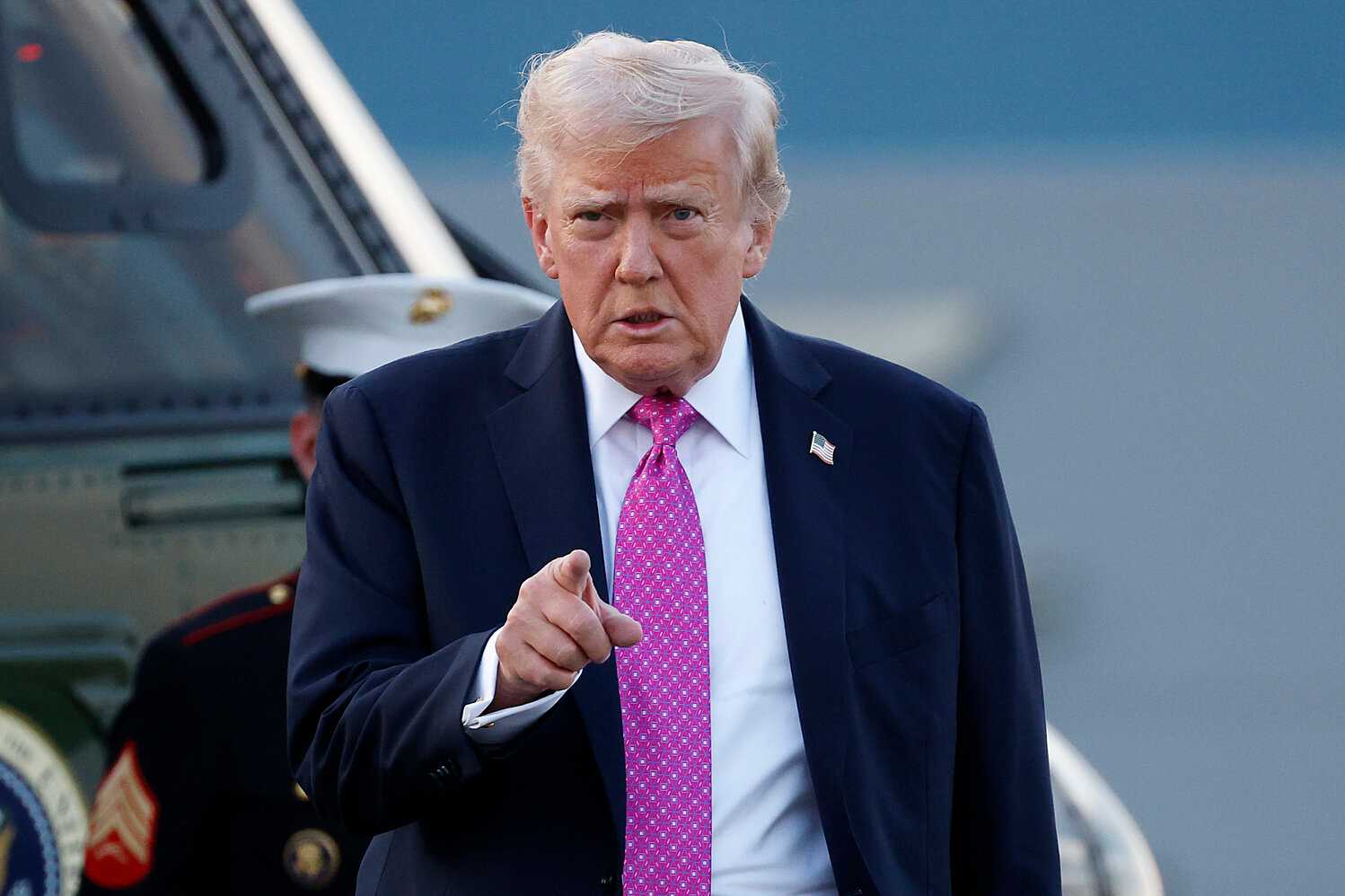
Echoing the core of his message, Trump explicitly urged, “The Republicans should say, we want to take over, we should take over the voting, the voting in at least many, 15 places. The Republicans ought to nationalize the voting.” This directive, delivered amid discussions of border security and midterm strategy, underscores Trump’s vision for a more centralized electoral framework under Republican influence. He tied the proposal to the SAVE Act, which passed the House in 2025 but stalled in the Senate, praising it as a tool to “insist on voter ID” and ensure “integrity.”
Republican responses have been mixed, revealing fissures within the party. House Speaker Mike Johnson, who has supported voter integrity bills, stopped short of endorsing a full nationalization but emphasized the need for reforms. “We must safeguard our elections from fraud and ensure only citizens vote,” Johnson said in a statement, avoiding direct reference to Trump’s specifics. Other GOP figures, like Senator Marco Rubio of Florida, have advocated for “nationalizing” the midterm narrative, focusing on unified messaging around inflation and crime rather than localized issues. Yet, moderates worry that such rhetoric could alienate swing voters in purple districts.
Democrats, meanwhile, have seized on the comments to rally their base, framing them as part of a broader Republican assault on voting rights. House Minority Leader Hakeem Jeffries accused Trump of attempting to “subvert democracy” and vowed to block any legislation that erodes state autonomy. “This is not about integrity; it’s about control,” Jeffries said at a news conference. Advocacy groups like the American Civil Liberties Union echoed this, warning that nationalization could lead to disenfranchisement of marginalized communities.
Broader Implications for Midterm Dynamics
As the 2026 midterms approach, Trump’s intervention could reshape campaign strategies. Republicans aim to capitalize on a 50-million-voter turnout gap between presidential and off-year elections by positioning Trump as a “turnout machine.” He has pledged to campaign extensively, focusing on battleground states where his base remains fervent. However, polls show vulnerabilities: A recent CBS News survey indicated Democrats leading in generic ballot preferences, buoyed by recent special election wins in Texas.
The push for election reforms intersects with other national crises, including a partial government shutdown over funding disputes and ongoing immigration protests. Trump’s remarks came amid criticism of his administration’s border policies, with reports of Immigration and Customs Enforcement agents conducting door-to-door operations in Minnesota, demanding proof of citizenship—a tactic decried as intimidating. He linked these to voting, claiming without evidence that migrants are imported to sway elections.
Historical parallels abound. Efforts to federalize elections date back to Reconstruction, when Congress imposed safeguards in Southern states to protect Black voters. More recently, the Voting Rights Act of 1965 centralized oversight to combat discrimination, but key provisions were gutted by the Supreme Court in 2013. Trump’s proposal inverts this, aiming to tighten rather than expand access, which critics say could suppress turnout among minorities and young people.
Legal and Political Hurdles Ahead
Implementing nationalization would face formidable obstacles. The Supreme Court, with its conservative majority, has upheld state prerogatives in cases like Brnovich v. Democratic National Committee (2021), which limited challenges to voting restrictions. Any federal takeover might require new legislation, but with Democrats controlling enough Senate seats to filibuster, passage is uncertain.
GOP strategists acknowledge the risks. “Nationalizing the vote could backfire if it’s seen as overreach,” said one anonymous Republican aide. Instead, the party is prioritizing incremental changes, such as expanding mail-in ballot restrictions and enhancing poll watcher roles in key states. Trump, however, shows no signs of relenting, having pressed for similar overhauls since his 2024 reelection.
Public opinion is divided. While a majority of Republicans support stricter voter ID laws, independents and Democrats view them as unnecessary barriers. A Pew Research Center poll from late 2025 found 76% of Republicans believing significant fraud occurred in 2020, compared to just 28% of Democrats.
Echoes of Past Controversies and Future Uncertainties
Trump’s history of election-related controversies—including his role in the January 6, 2021, Capitol riot—lends weight to concerns about his latest pronouncements. Allies like Bongino, who has echoed fraud claims, provide a platform for these views, amplifying them across conservative media.
As the midterm cycle intensifies, the debate over nationalizing elections could define the political landscape. Will it galvanize the GOP base or alienate moderates? For now, Trump’s words serve as a rallying cry, but their realization remains fraught with legal, political, and ethical challenges.
In the broader context, this push reflects deeper anxieties about American democracy in an era of polarization. Voting rights advocates urge vigilance, while Republicans argue for security. The coming months will test whether Trump’s vision gains traction or becomes another flashpoint in the nation’s ongoing struggle over who controls the ballot box.
This article is based on reports from BBC, CNN, NBC, Fox News, New York Times, and other media outlets.
Focus keywords: Trump nationalize elections, Republicans take over voting, Trump election fraud claims, SAVE Act voter ID, midterm elections 2026, Trump Bongino interview, Schumer Trump criticism, GOP election reforms