
A spiraling supply shock spreading across Asia threatens to cross the Pacific and reshape everyday life in the United States — from the price of a new car to the plastic wrap on your groceries.
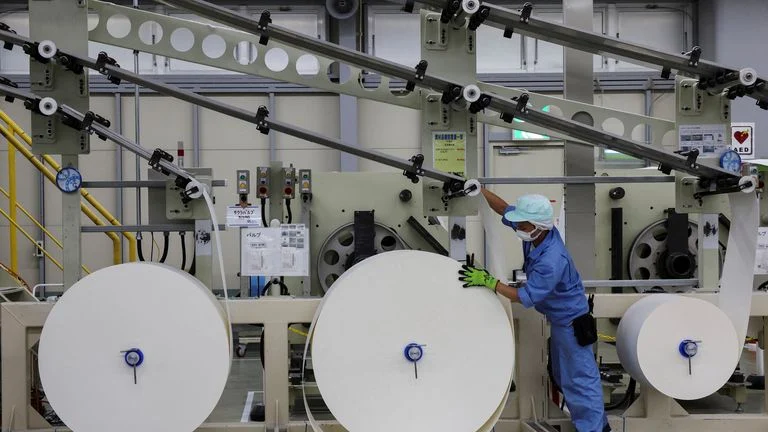
April 24, 2026 — Walk into a gas station in Seoul or Singapore right now, and you may find limits on how much fuel you can buy. Hospital administrators across Southeast Asia are quietly sourcing backup suppliers for medical equipment. Factory workers in South Korea are being sent home early because there isn’t enough feedstock to keep production lines moving. The crisis unfolding across Asia is not a regional inconvenience. It is a slow-moving wave, and the United States is directly in its path.
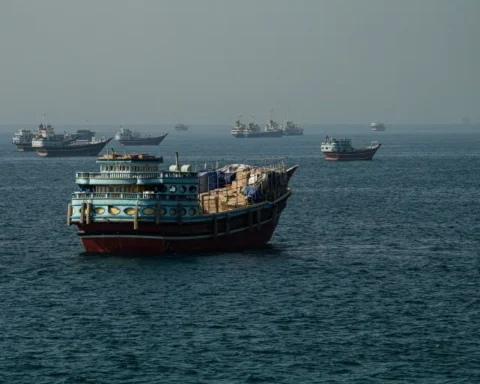
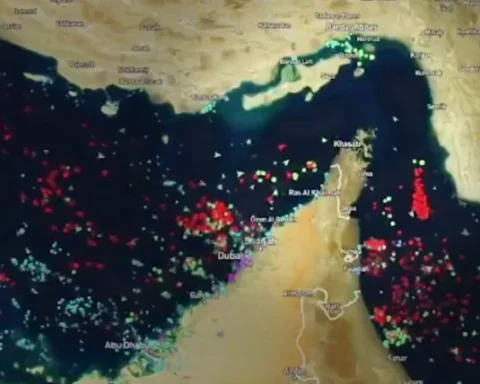
The trigger is a conflict that most Americans have watched from a safe distance: war in the Middle East and the closure of the Strait of Hormuz, one of the most consequential shipping lanes on earth. But the consequences of that closure are no longer confined to the Persian Gulf. They are rippling outward through global supply chains in ways that experts say the United States cannot ignore for much longer.
What the Strait’s Closure Actually Means for Your Living Room
When analysts talk about the Strait of Hormuz, the conversation typically turns to oil prices. But the deeper, slower, and arguably more dangerous threat lies in the raw materials that most consumers never think about: plastics, aluminum, rubber, fertilizers and petrochemicals.
The Middle East ships roughly a quarter of the world’s polypropylene and about 20 percent of its polyethylene — two of the most widely used plastics in manufacturing and packaging. It accounts for a quarter of the world’s sulphur supply and 15 percent of its fertilizer. These aren’t exotic commodities. They are ingredients in car bumpers, food containers, hospital tubing, sneaker soles and thousands of other products that move from Asian factories to American retail shelves.
“You hear a lot about crude oil and the impacts to diesel and gasoline — but feedstocks and petrochemicals are in short supply, too,” said Angie Gildea, KPMG’s global head of oil and gas. Several major petrochemical producers have already declared force majeure — a legal acknowledgment that they cannot fulfill their contracts because of circumstances beyond their control.
The ripple effects are beginning to show. Energy analysts at Kpler project that oil supply losses from the strait closure will reach 700 million barrels by the end of April alone. As fuel grows scarce in parts of Asia, factory workers face longer commutes and higher costs just getting to work. Production slows. Exports thin out. And eventually, shelves on the other side of the ocean start to look a little emptier.
Asia’s Supply Shock Is Heading Straight for the American Economy
The critical question for American consumers and businesses is not whether this supply disruption will eventually arrive on U.S. shores — most economists say it will. The question is when, and how badly.
Stephen Brown, a leading North American supply chain analyst, offered a sobering timeline: it could take roughly three months for plastic shortages to spread meaningfully around the world, and about four months before automakers are forced to cut production due to aluminum constraints. Neither plastic nor aluminum is typically stockpiled in large quantities, meaning there is not much of a cushion to absorb a prolonged disruption.
The International Monetary Fund, in its April 2026 World Economic Outlook, warned that disrupted deliveries of fertilizers, petrochemicals and materials like helium and sulphur raise the risk of broader supply-chain breakdowns if the conflict persists. The IMF’s baseline forecast already assumes a moderate 19 percent rise in energy prices this year, trimming global growth to 3.1 percent. Its adverse scenario, where disruptions deepen, puts global growth at just 2.5 percent and headline inflation above 5 percent.
There is one important distinction between this crisis and the chaos of the pandemic years: American companies are better prepared. Years of supply-chain hardening — first during COVID-19 and then through the turbulence of the 2025 tariff campaign — have made U.S. importers somewhat more resilient. Many firms diversified their sourcing away from a single region, and world trade was on relatively solid footing in the weeks just before the war began.
But that resilience has limits. “Tariffs were levied by the administration and could be pulled back by the administration,” one industry executive noted. “It’s much harder to extricate America from this cleanly.” Unlike a policy decision, a war does not come with a negotiations hotline that can flip the situation in a weekend.
The Waiting Game — And What Comes Next
For now, the most accurate answer to whether Americans should expect widespread shortages is: not yet, but possibly. The last shipments of Middle Eastern energy products that were already en route arrived in Asia just as the war began, providing a brief buffer. Factories have not yet been forced into major production adjustments. The machine is still running, just more slowly, and on fumes.
But the buffer is burning. Every week the Strait of Hormuz remains closed, the downstream consequences compound. The IMF’s more severe scenario — where the energy supply disruption extends well into 2027 — would result in cumulative output losses of roughly two percentage points across Asia’s major economies, with particularly harsh impacts on import-dependent nations. Asia, for all its resilience, remains deeply reliant on imported oil and gas. That vulnerability is now being tested in real time.
For American consumers, the near-term advice from analysts is not to panic, but to pay attention. The pandemic taught a hard lesson about how quickly shelves can change. This time, the warning signs are visible earlier — and the window to act, for businesses and policymakers alike, is narrowing.
This article is based on reporting and data from CNN Business, the International Monetary Fund World Economic Outlook (April 2026), and McKinsey Global Institute.
Focus Keywords: Asia supply shock America, Strait of Hormuz supply chain, US goods shortage 2026, Middle East war supply chain, Asian factory shortages United States, global supply disruption 2026